
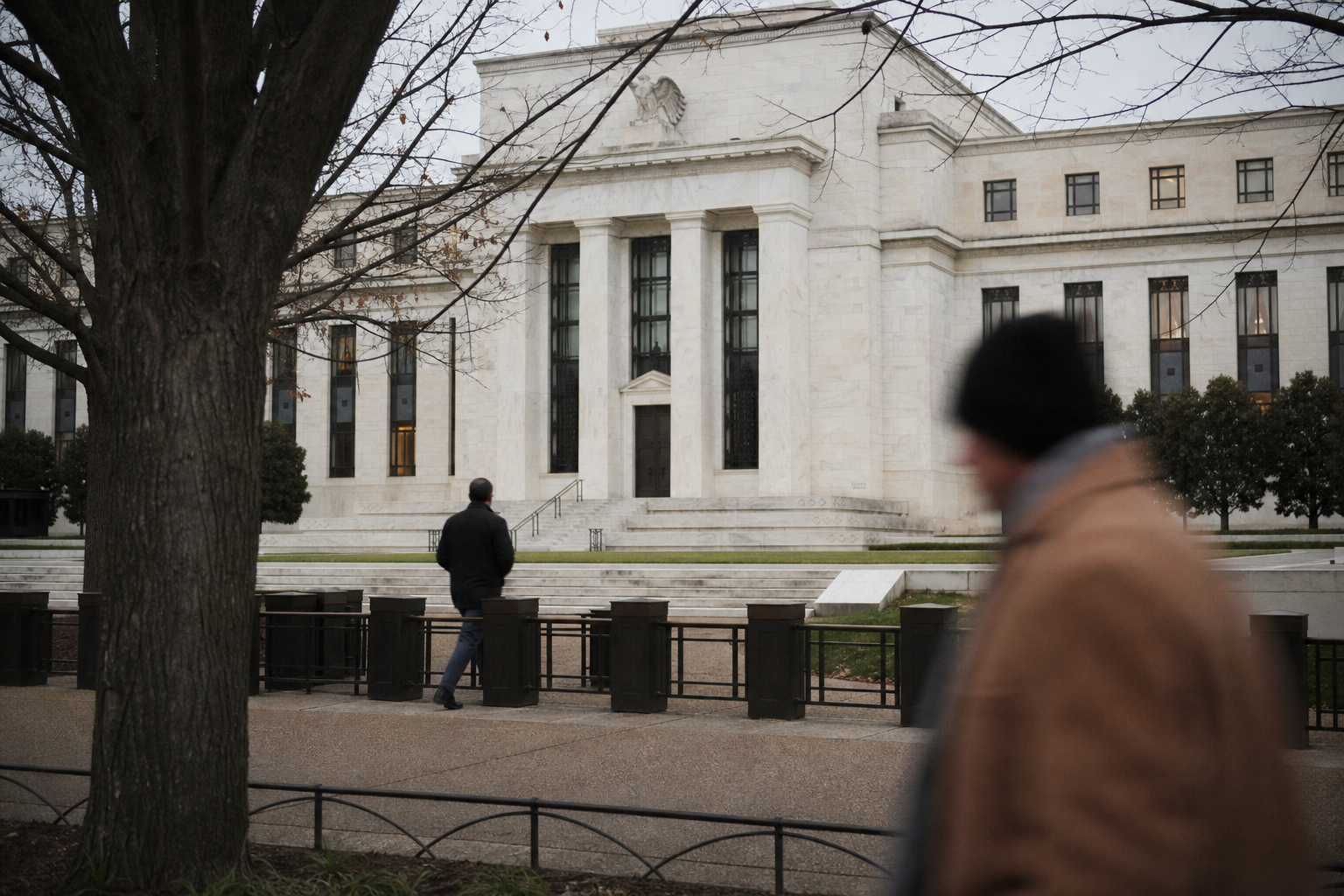
Wall Street is facing a rate outlook that leaves little room for complacency: respondents to a new CNBC Federal Reserve survey expect at least two additional interest-rate increases over the next year. That expectation matters because markets are already absorbing a major repricing in bond yields, with the US 10-year Treasury yield reaching its highest level since 2007.
The message for traders is direct but not one-dimensional. Higher oil prices helped push the rate outlook upward, yet roughly three-quarters of survey respondents said inflation is broader than energy prices alone. If that assessment persists, the Federal Reserve may face pressure to keep policy restrictive for longer, potentially weighing on equities, rate-sensitive assets and Canadian commodity exporters through a firmer US dollar.
The CNBC survey captures a consensus view of at least two more Federal Reserve rate hikes during the next year. The distinction between one additional move and at least two is important for markets: it shifts the debate away from whether policy will tighten further and toward how much additional tightening could be required.
Oil prices are part of the pressure—but not the whole story
Higher oil prices were identified as a major factor behind the revised rate outlook. Energy costs can lift headline inflation expectations, but the survey's broader finding is more consequential for monetary policy. Roughly three-quarters of respondents viewed inflation as extending beyond energy prices, indicating concern about underlying price pressures rather than a temporary commodity-driven increase alone.
That reading could make the Federal Reserve less willing to treat higher energy prices as an isolated shock. If inflation is judged to be broad, additional rate increases may remain part of the policy conversation even if oil prices become less influential. For traders, the result is a more persistent rate-risk framework: inflation data and policy expectations may continue to matter across both stocks and bonds.
Treasury yields show the repricing is already underway
A concurrent Reuters report said the US 10-year Treasury yield reached its highest level since 2007. That move signals that bond markets are repricing the path for interest rates, rather than simply responding to a single policy meeting. The 10-year yield is a key reference point for financing conditions and for how investors value future cash flows.
With expectations for at least two more hikes and the 10-year yield at a multiyear high, the pressure on duration-sensitive assets could remain significant. Higher yields can make future earnings and cash flows appear less valuable in present-value calculations. They can also increase the comparative appeal of fixed-income assets relative to segments of the equity market, although the direction of individual securities would still depend on company-specific factors not addressed in the survey.
Growth stocks, REITs and small-caps face a tougher rate backdrop
Technology stocks listed on the Nasdaq and NYSE, real estate investment trusts and small-cap stocks are among the market segments that could remain sensitive to this environment. The common thread is exposure to financing costs, valuation assumptions or economic growth expectations.
- Technology stocks: Higher Treasury yields could pressure valuations that depend heavily on expected future cash flows.
- REITs: Additional tightening could raise the importance of borrowing costs and the relative appeal of income-oriented assets.
- Small-caps: A restrictive policy backdrop could weigh on growth expectations and financing conditions for smaller companies.
These are potential transmission channels, not a forecast that every stock in these groups will decline. The key market variable is whether rate expectations continue moving higher or stabilize after the repricing already reflected in Treasury yields.
Dollar strength creates a cross-border consideration
Additional Federal Reserve tightening could support the US dollar by reinforcing expectations for higher US interest rates. That would add another layer to the outlook for Canadian commodity exporters. A stronger US dollar could weigh on the Canadian-dollar value of commodity-related revenues and complicate the market response for exporters, even when higher oil prices provide support to the underlying commodity backdrop.
The combined picture is therefore unusually data-dependent. The CNBC survey points to at least two more hikes, roughly three-quarters of respondents see inflation as broader than energy, and the 10-year Treasury yield has reached its highest level since 2007. Until those signals change, the rate market may continue setting the tone for US equities, interest-rate-sensitive sectors and North American currency-sensitive assets.
Bull/Bear Verdict
Bull Case: If inflation proves less persistent than the survey suggests, the expectation for at least two more hikes could moderate, potentially easing pressure from the 10-year Treasury yield, technology stocks, REITs and small-caps.
Bear Case: If broader inflation and higher oil prices keep the rate outlook elevated, the 10-year yield’s highest level since 2007 could be followed by continued pressure on rate-sensitive US equities and Canadian commodity exporters through a firmer US dollar.