
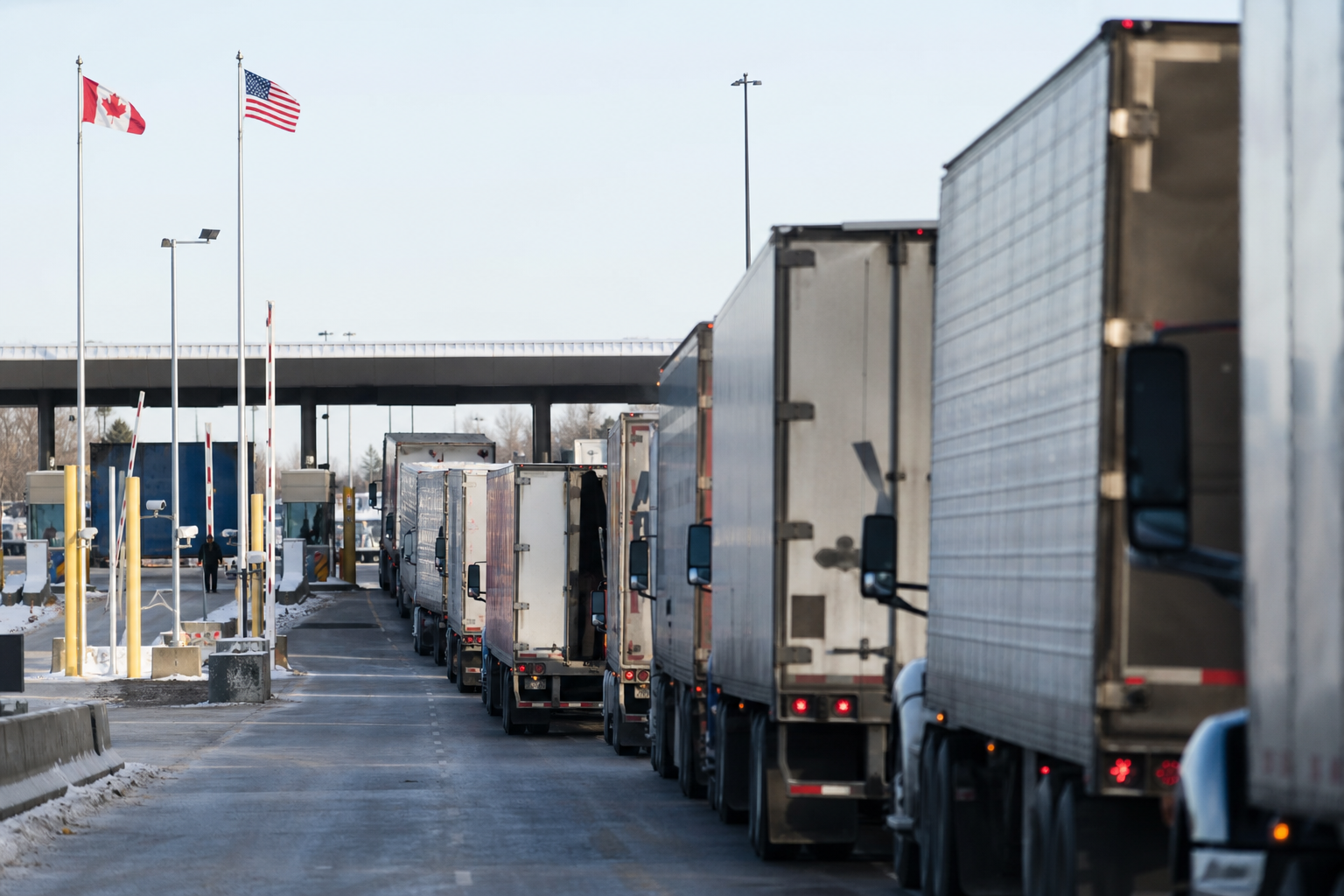
Canada’s trade negotiations with the United States have broken down without an agreement to prevent President Trump’s new tariffs from taking effect. For North American markets, the immediate issue is not a confirmed Canadian tariff package—it is the growing probability of a renewed trade confrontation and the uncertainty now facing cross-border businesses.
Canadian officials are signaling that Ottawa is prepared to respond rather than wait passively for Washington. “We’re not waiting by the phone,” one official warned. That message raises the stakes for the TSX Composite, Canadian exporters and the USD/CAD currency pair as traders assess whether the dispute moves from diplomatic failure to formal retaliation.
Canadian negotiators left the United States after failing to reach a deal. The departure removes the near-term prospect of a negotiated solution and leaves President Trump’s new tariffs on course to take effect, according to the assignment’s source. Canada is described as poised to retaliate, but retaliatory tariffs have not been formally announced. That distinction matters: markets are now dealing with a heightened policy threat, not a completed Canadian tariff schedule.
The breakdown increases the risk of a renewed US-Canada trade war because both sides are moving away from a deal while publicly preparing for the next step. The exact scope, timing and product coverage of any Canadian countermeasures are not specified in the source. That lack of detail may itself become a trading problem, as investors attempt to price several possible outcomes without a confirmed list of targeted goods.
Where TSX exporters could feel the pressure
TSX-listed energy producers, manufacturers, autos, lumber companies and agriculture businesses are the sectors most directly relevant to the trade dispute identified in the assignment. Their common exposure is cross-border commerce: new tariffs or counter-tariffs could alter the cost and competitiveness of goods moving between Canada and the United States.
- Energy producers: Potential tariff friction could create additional uncertainty for Canadian energy exports and the commercial terms governing shipments into the US. The source does not state which energy products would be targeted or provide an estimated financial impact.
- Manufacturers: Canadian manufacturers could face higher trade costs or a more complicated export environment if both governments impose new measures. The absence of a finalized retaliation list means the specific companies and products at risk remain unclear.
- Autos: The auto sector warrants close attention because it relies on integrated North American production and cross-border movement. Any new tariff action could raise questions about supply chains, pricing and competitiveness, although the source provides no product-level details.
- Lumber: Lumber companies are another identified area of exposure. Potential restrictions could affect the economics of shipments to US buyers, but no new lumber tariff, rate or effective date has been announced in the provided information.
- Agriculture: Canadian agriculture exporters could face pressure if retaliation reaches farm products or if US measures disrupt established trade channels. At this stage, that remains a potential exposure rather than a confirmed policy outcome.
The market implication is therefore asymmetric: the downside scenarios are identifiable by sector, but their scale cannot yet be measured from the available information. Investors can review the reported breakdown in Canada-US trade talks, while treating any discussion of Canadian retaliation as conditional until Ottawa publishes formal measures.
TSX Composite and USD/CAD are the key gauges
The TSX Composite is the broad Canadian equity-market indicator to watch for changing expectations. A weaker tone in the index could suggest that traders are assigning a higher probability to prolonged trade disruption, particularly across the export-sensitive sectors named above. A steadier index would not eliminate the policy risk, but it could indicate that markets are waiting for concrete details before repricing exposure.
USD/CAD offers a second, more immediate read on sentiment. Shifts in the currency pair may signal changing expectations around Canadian retaliation, US tariff implementation and the relative pressure on Canadian exporters. The assignment does not provide a current exchange rate or a measured move, so the focus is on monitoring volatility and direction rather than declaring that the currency has already reacted.
Near-term trading risk is driven by the information gap. Negotiators have left without a deal, officials are warning that Canada is ready to act, and the source does not identify a final Canadian tariff package. Until those details emerge, headlines may move expectations faster than corporate fundamentals. The cleanest market distinction is between readiness and action: Canada has signaled preparedness to retaliate, but formal countermeasures have not been announced.
Bull/Bear Verdict
Bull Case: The TSX Composite and Canadian exporters may avoid a deeper repricing if the failed talks lead to renewed negotiations before formal Canadian retaliation is announced.
Bear Case: The absence of a deal, the warning that “We’re not waiting by the phone,” and the prospect of US tariffs taking effect could increase volatility for TSX-listed energy, manufacturing, auto, lumber and agriculture exposures, with USD/CAD signaling higher uncertainty.