
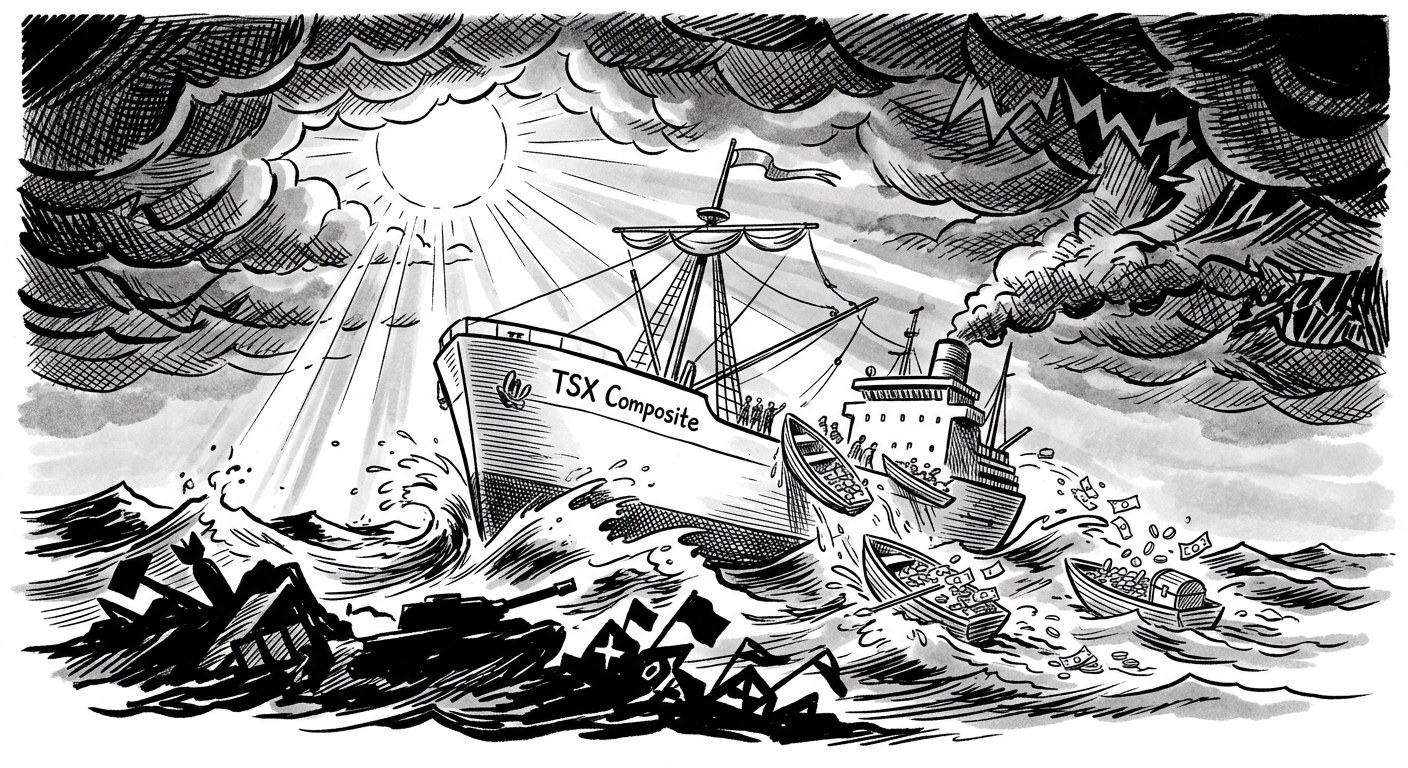
The Canadian markets have demonstrated remarkable resilience in the face of various challenges, particularly through the month of March. The S&P/TSX Composite Index, which serves as a bellwether for the health of the Canadian economy, encountered a decline of approximately 6% during this period. Yet, as we assess the broader landscape, it becomes evident that the underlying dynamics of the market paint a more nuanced picture.
As we delve into the details, it’s important to note the positive momentum late in the month, largely fueled by gains in major financial institutions such as the Royal Bank of Canada ($RY) and TD Bank ($TD). These institutions have not only shown strength in their earnings reports but also have benefited from a favorable interest rate environment that supports lending activities. The resurgence of these banking giants has been a beacon of hope for investors, signaling that even amidst uncertainty, there are pockets of opportunity.
Adding another layer of complexity to the market dynamics is the performance of the Canadian mining sector, which has been significantly influenced by rising gold prices. Gold, often viewed as a safe-haven asset during times of geopolitical strife, has seen increased demand. This uptick has positively impacted Canadian mining stocks, which are pivotal to the TSX. As investors flock to gold in response to market volatility, companies in this sector are well-positioned to capitalize on these trends, further bolstering the index.
Moreover, preliminary data indicating a third consecutive expansion in Canadian GDP for February adds a favorable backdrop to these developments. A growing economy is typically a harbinger of improved corporate earnings, which can translate into higher stock prices. This GDP growth underscores the resilience of the Canadian economy even as it grapples with external challenges, including geopolitical tensions and fluctuating commodity prices.
As we look ahead to the upcoming trading period, several key factors will likely shape the trajectory of the TSX Composite. The interplay between domestic economic indicators and external geopolitical influences will be crucial. The recent discussions around U.S. President Trump contemplating a potential exit from the Iran war have stirred investor sentiment, causing futures tracking the S&P/TSX Composite Index to rise. Such developments can lead to increased market volatility, yet they also present opportunities for patient investors who are willing to navigate the short-term noise.
In conclusion, while the TSX Composite faced a challenging March with a notable decline, its resilience is underscored by strong performances from key sectors, particularly finance and mining. The ongoing expansion in GDP and the shifting geopolitical landscape are factors that investors should monitor closely. For long-term investors, focusing on the fundamentals and the broader market trends rather than the immediate fluctuations will be essential. As Warren Buffett wisely advises, “The stock market is designed to transfer money from the Active to the Patient.” With this in mind, the Canadian markets may very well be presenting a valuable long-term opportunity amidst the noise.