
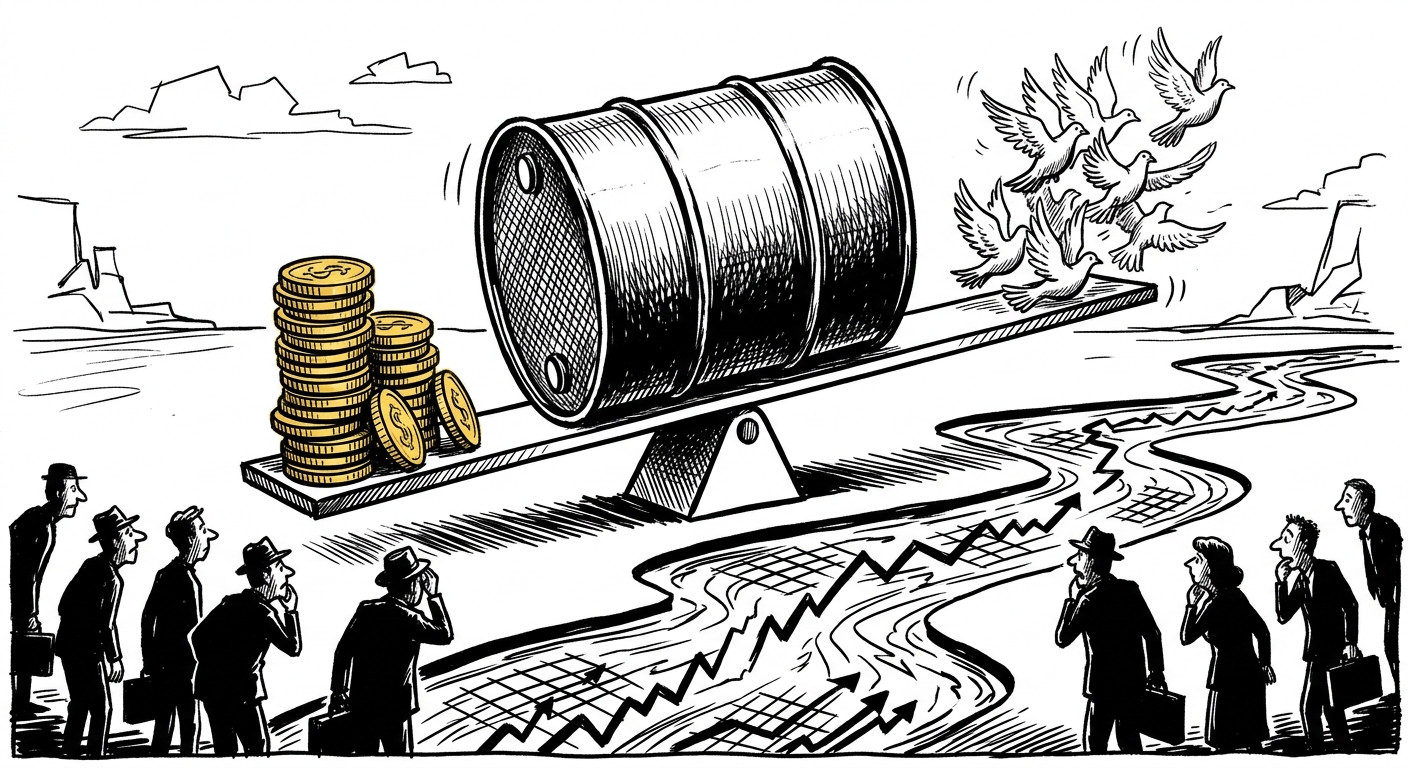
The recent ceasefire announcement between the US and Iran has sent ripples through the global energy markets, leading to a significant decline in energy sector shares, particularly in the realm of crude oil. For long-term investors, this presents both challenges and opportunities as we navigate the shifting landscape of energy valuations.
The Global Decline in Energy Sector Shares
As oil prices plummeted in the wake of the ceasefire announcement, energy sector stocks followed suit. This drop in oil prices reflects a broader sentiment in the market, where geopolitical tensions often serve as a barometer for energy valuations. The recent easing of tensions has removed a layer of uncertainty, thereby reshaping investor expectations and leading to a reassessment of how energy companies are valued.
The Impact of the US-Iran Ceasefire Announcement
The ceasefire effectively reduces the risk associated with potential military conflicts in the Middle East, a region that has long been a flashpoint for crude oil supply disruptions. Consequently, the immediate effect on crude oil prices has been a downward adjustment as traders recalibrate their forecasts for supply and demand dynamics. This shift is particularly relevant for investors in the energy sector, as lower oil prices typically translate to lower revenues and profits for energy producers.
The Reduction of Geopolitical Risk Premium
With the geopolitical risk premium diminishing, energy company valuations are being re-evaluated. Historically, companies like $XOM (ExxonMobil) and $CVX (Chevron) have benefitted from elevated oil prices driven by geopolitical concerns. However, as the risk of conflict subsides, the energy sector is likely to face a re-pricing of assets. Investors should be aware that this reduction in risk premium can lead to a cooling off in stock prices, as the market adjusts to reflect more stable conditions.
Implications for US and Canadian Energy Stocks
For investors in both the US and Canadian markets, this is a crucial time to reassess energy holdings. The decline in oil prices and the subsequent drop in stock valuations could signal a temporary setback for energy stocks. However, it is essential to consider the long-term fundamentals of these companies. For instance, $SU.TO (Suncor) and $CNQ.TO (Canadian Natural Resources) are well-positioned to weather these fluctuations due to their robust operational efficiencies and diversified portfolios.
Re-Evaluating Your Holdings
As we witness this shift in the energy landscape, it is vital for long-term investors to remain calm and collected. The current market dynamics present an opportunity to evaluate your investment thesis on energy companies. Are you invested in companies that have strong fundamentals and can withstand the pressures of fluctuating oil prices? For long-term investors, the key is to focus on the underlying business models and their ability to adapt to changing market conditions.
Key Companies to Watch
Among the US and Canadian energy stocks, $XOM (ExxonMobil), $CVX (Chevron), $SU.TO (Suncor), and $CNQ.TO (Canadian Natural Resources) are particularly noteworthy. These companies have established themselves as leaders in the industry and are likely to navigate the current environment with a strategic focus on cost management and operational efficiency.
- $XOM (ExxonMobil): A global leader that may face pressure from lower oil prices but has a diverse portfolio to mitigate risks.
- $CVX (Chevron): Known for its strong balance sheet and commitment to shareholder returns, Chevron is another giant that could benefit from a long-term perspective.
- $SU.TO (Suncor): As a major player in the Canadian market, Suncor’s resilience and operational prowess position it favorably during downturns.
- $CNQ.TO (Canadian Natural Resources): With a solid foundation and focus on sustainability, CNQ is well-equipped to handle the current volatility.
In summary, while the immediate impact of the US-Iran ceasefire has led to a decline in energy sector shares, it is essential for investors to look beyond short-term fluctuations. By focusing on companies with strong fundamentals and a long-term growth strategy, investors can position themselves to benefit from the eventual recovery in energy prices. As always, patience and a steady hand are vital for navigating the complexities of the market.