
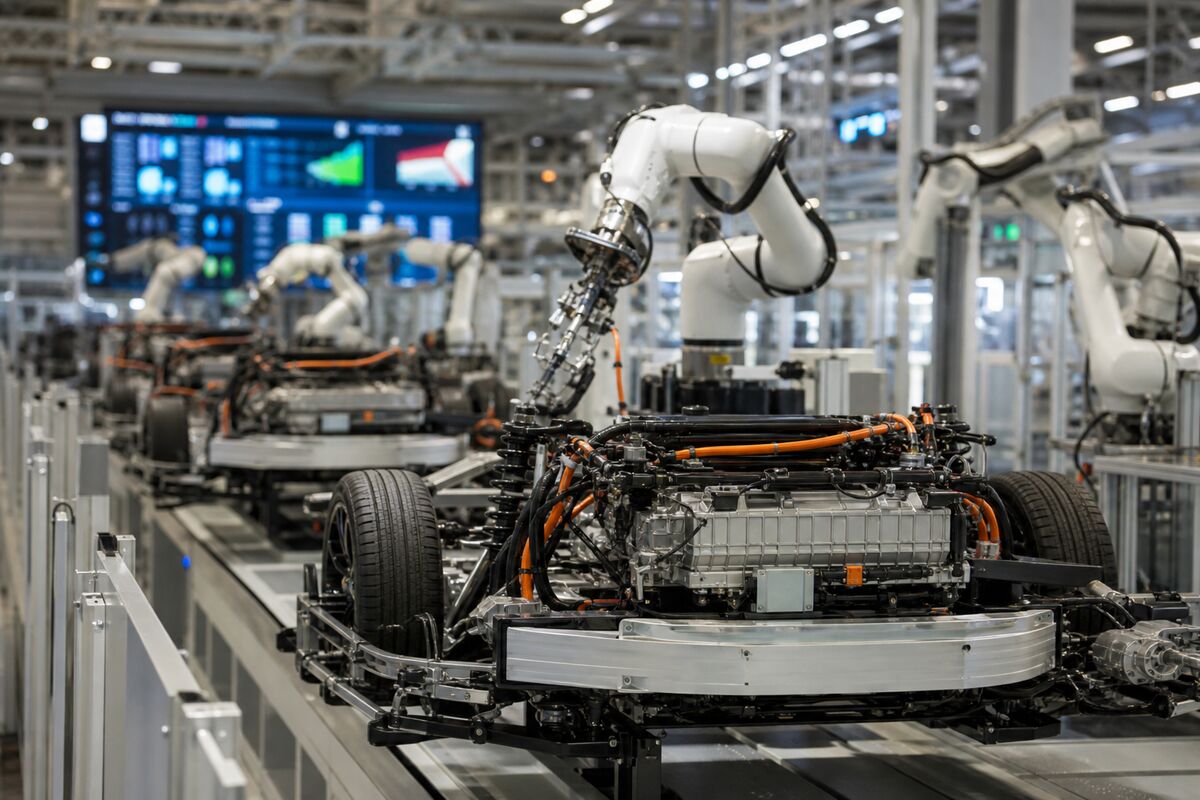
The auto industry is not waiting for an all-electric future to arrive on schedule. Honda Motor Co’s decision to invest $3 billion in a new vehicle assembly plant in Ohio is a forceful reminder that manufacturers are still committing capital to U.S. production—but are placing a clear bet on hybrids along the way.
Production is expected to begin in 2029, making this more than a short-term manufacturing announcement. It is a long-range industrial commitment that could reshape regional sourcing, support domestic assembly capacity and reinforce the role of hybrid vehicles as automakers navigate slower EV adoption. Honda’s Ohio investment is therefore relevant well beyond the company itself.
A major vote of confidence in U.S. manufacturing
A $3 billion assembly plant represents a substantial allocation of capital to the American industrial base. The choice of Ohio places vehicle production at the center of the investment, with implications for the broader network of suppliers, logistics providers and manufacturing contractors that support an assembly operation.
For U.S. industrial and auto-supply-chain investors, the central message is straightforward: vehicle manufacturing remains a long-term economic activity in the United States, even as the technology mix changes. A new plant can create demand not only for final assembly but also for components, materials, equipment and transportation services connected to production.
That does not mean every supplier will benefit equally. The hybrid focus matters because it points toward a supply chain that must support both conventional vehicle systems and electrified powertrains. Companies positioned across that transition may see a more durable operating environment than those tied exclusively to one technology path. The investment suggests that flexibility—not ideological certainty—could be the defining industrial advantage.
Hybrids gain strategic importance
Honda’s plant will focus on hybrid vehicles, at a time when EV adoption is slowing. That combination is the critical market signal. Automakers continue to pursue electrification, but the pace of the transition is not uniform. Hybrids offer a middle path: they preserve the electrified-vehicle direction while avoiding an immediate dependence on a fully electric production model.
For Honda, committing new U.S. capacity to hybrids indicates that the company sees continued demand for that category through the end of the decade. It also gives the manufacturer a dedicated domestic platform for producing vehicles aligned with current market conditions rather than relying solely on a faster EV transition.
The investor lens
The Ohio project could matter to industrial-market observers in three ways. First, it confirms that onshoring remains a meaningful corporate strategy. Second, it highlights how vehicle demand is influencing factory planning and supplier requirements. Third, it demonstrates that the auto industry’s transition may be more incremental than the most aggressive EV forecasts implied.
Production is not expected to start until 2029, so the investment is fundamentally a long-duration industrial story. Its significance will depend on execution, hybrid demand and the evolution of EV adoption. Still, the capital commitment is difficult to dismiss: Honda is building for a future in which electrification continues, but hybrids occupy a larger role than many earlier assumptions allowed.
Bull/Bear Verdict
Bull Case: Honda’s $3 billion Ohio commitment and planned 2029 production could support U.S. manufacturing and auto suppliers while positioning hybrids for continued demand as EV adoption slows.
Bear Case: The plant will not begin production until 2029, and its outlook could depend on whether hybrid demand remains strong as EV adoption and the broader vehicle technology mix evolve.