
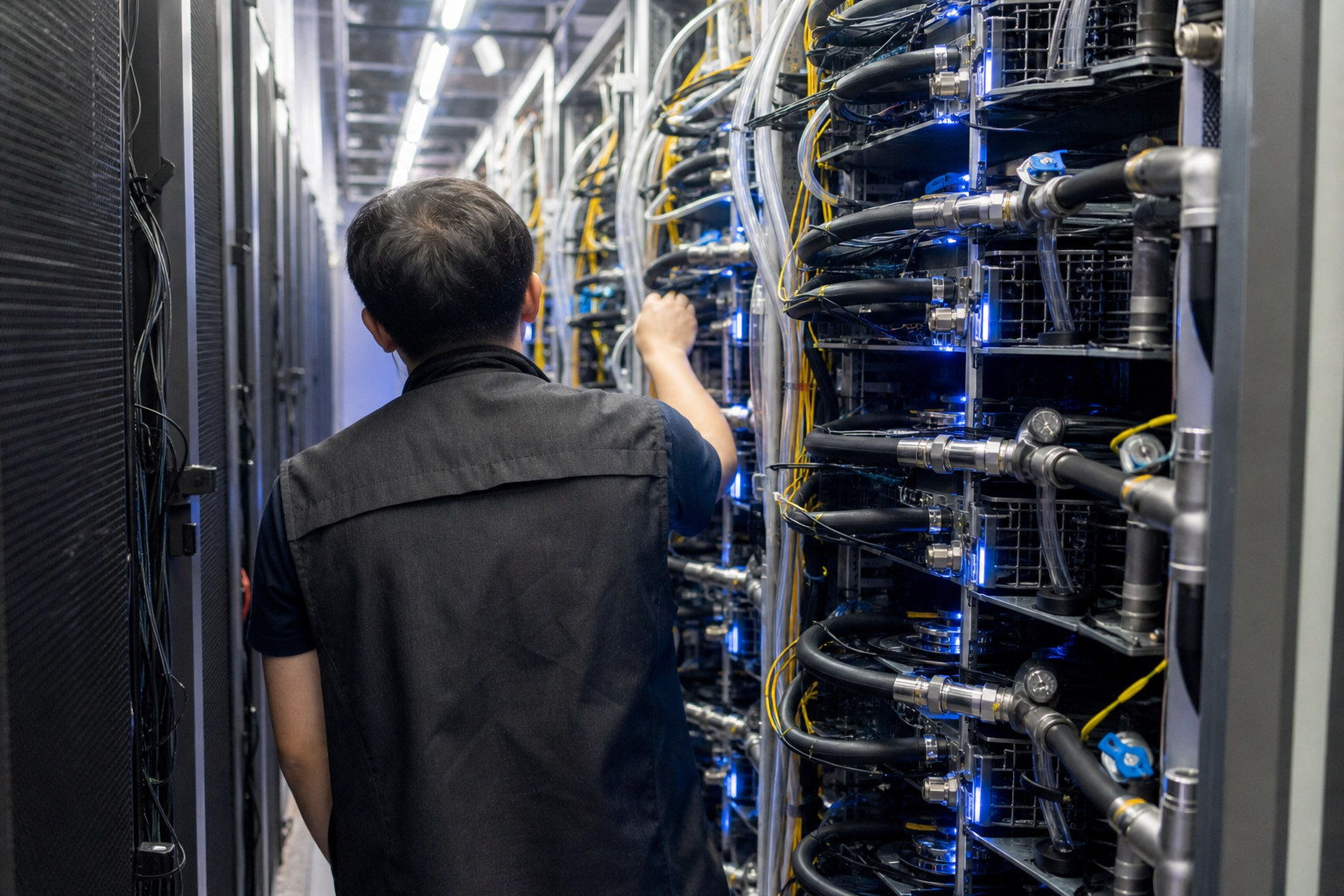
IREN is no longer presenting itself as merely a company that turns electricity into Bitcoin. With its acquisition of Mirantis completed on August 4, 2026, the Nasdaq-listed business is assembling a software layer for an AI cloud platform—an important step in a market where powerful hardware is increasingly only the opening act.
The transaction gives IREN a way to move up the technology stack. Mirantis brings enterprise-grade Kubernetes and container-management capabilities, while IREN supplies the data-center infrastructure and AI cloud ambition. The strategic question for investors is not whether the deal automatically creates financial gains—it does not establish that—but whether software can make IREN’s hardware-heavy platform more useful and more distinct.
In its announcement of the completed acquisition, IREN described the transaction as strengthening the software layer of its vertically integrated AI Cloud Platform. That wording matters. A vertically integrated model aims to control more of the customer experience, from the physical infrastructure supporting workloads to the tools used to deploy, manage and scale them.
From Bitcoin blocks to AI workloads
IREN’s origins as a Bitcoin mining company give the pivot a clear industrial logic. Mining operations require substantial computing infrastructure, power capacity and data-center management. AI cloud infrastructure also demands capital-intensive facilities and advanced computing resources, but customers typically need more than machines in a building. They need software that helps orchestrate workloads across those machines.
That is where Mirantis enters the story. Kubernetes is widely associated with managing containerized applications, while container-management software can help enterprises organize and operate complex workloads. In IREN’s emerging platform, those capabilities could serve as the connective tissue between physical infrastructure and the businesses trying to use it.
Why the software layer could matter
AI infrastructure is crowded with companies pursuing access to computing capacity. Hardware can be expensive and difficult to deploy, but hardware alone may not provide a lasting distinction. By adding enterprise software, IREN could aim to offer customers a more integrated environment rather than positioning itself solely as a provider of data-center capacity.
That does not confirm revenue synergies, valuation changes or any improvement in operating results. The acquisition’s strategic rationale is clearer than its financial impact. The available announcement does not establish acquisition financial terms, analyst upgrades or specific customer wins, so those conclusions remain outside the evidence.
Still, the combination creates a potentially more interesting technology narrative. Mirantis’ capabilities may help IREN address the operational complexity that comes with AI workloads, while IREN’s infrastructure could give the software a physical platform on which to operate. Whether that becomes a meaningful competitive advantage will depend on execution, customer adoption and the company’s ability to make the integrated offering easier or more effective to use.
What the market may watch next
Investor enthusiasm for AI infrastructure has helped place technology stocks at the center of the broader market conversation, with the Nasdaq showing positive momentum in the context provided for this deal. That backdrop can make strategic acquisitions more visible—and can also raise the standard for proof.
For $IREN, traders may watch trading volume around the announcement, subsequent analyst commentary and whether investors interpret the acquisition as improving the company’s competitive positioning. The most important signal may be whether the market begins to view IREN less as a Bitcoin mining company with an AI project and more as an AI cloud infrastructure provider with a software stack.
That re-rating, if it emerges, would be a market interpretation rather than a confirmed outcome. For now, the Mirantis acquisition gives IREN a more complete strategic pitch: computing infrastructure below, enterprise orchestration above, and an ambitious attempt to connect the two.
Bull/Bear Verdict
Bull Case: Mirantis’ enterprise Kubernetes and container-management capabilities may strengthen IREN’s vertically integrated AI Cloud Platform and help differentiate its infrastructure-focused business.
Bear Case: The acquisition confirms a strategic direction but does not yet establish revenue synergies, financial benefits or improved valuation, leaving investors to judge execution through trading volume, commentary and competitive positioning.