
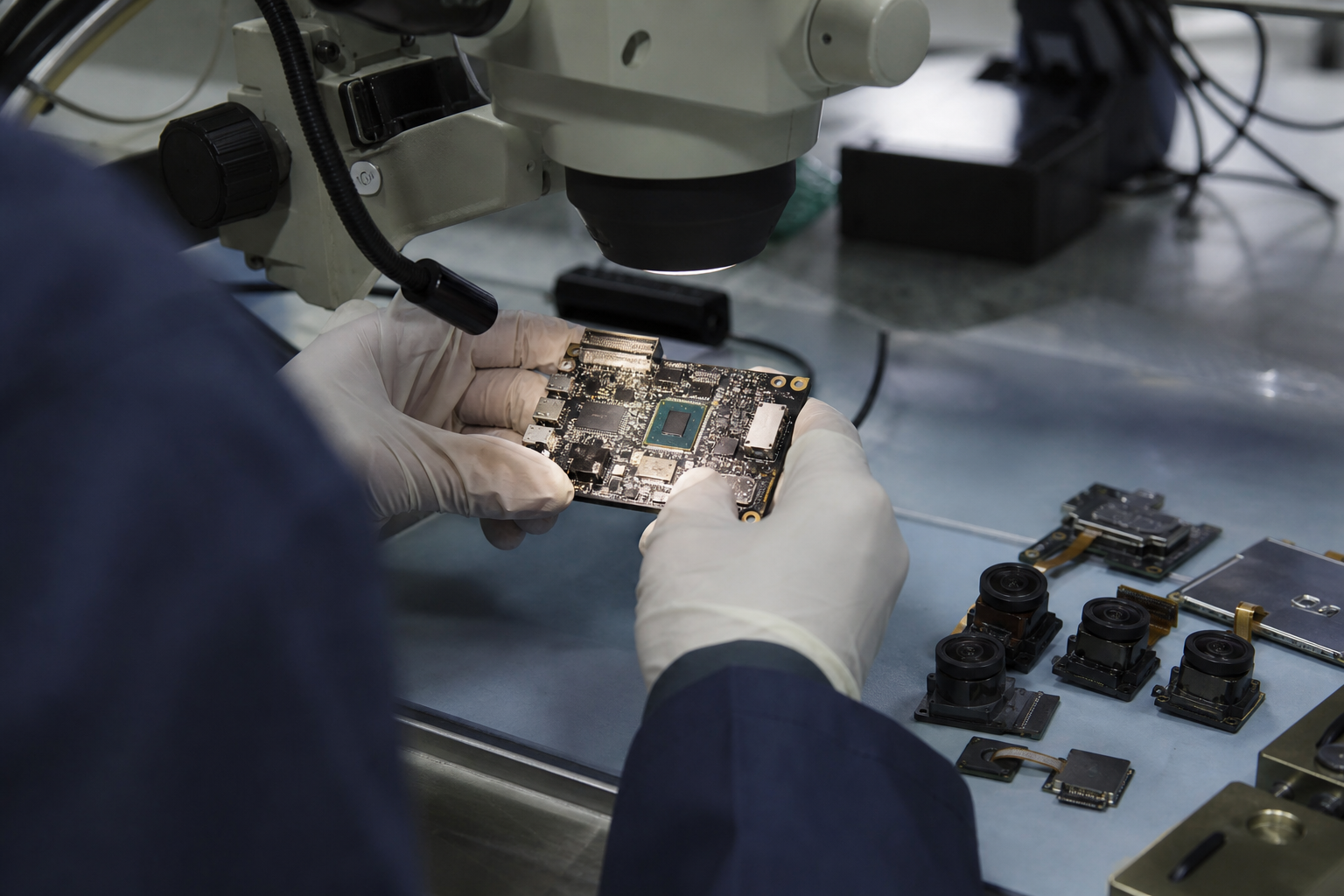
Microchip Technology has completed its acquisition of Hailo, giving the Nasdaq-listed semiconductor company additional AI accelerator and vision processor capabilities at a time when more computing workloads are moving closer to devices and systems. The transaction strengthens the strategic case for $MCHP in edge AI and embedded computing, but it does not yet provide evidence of an immediate financial impact.
That distinction matters for investors. The announcement establishes a broader product portfolio, not a new revenue or earnings forecast. Microchip did not disclose financial terms for the transaction in the source data, and there is no separately sourced information here on how the acquisition may affect revenue, earnings, valuation or the $MCHP share price.
In a September 21, 2026, press release, Microchip confirmed that the Hailo acquisition had closed. Hailo is described as an AI accelerator and vision processor company. Its technologies add two capabilities directly relevant to the edge-computing market: hardware designed to accelerate artificial-intelligence workloads and processors focused on vision applications.
Why the portfolio addition matters
Edge AI refers to processing workloads closer to the device or system generating the data, rather than relying exclusively on centralized computing resources. That model is strategically important in embedded computing, where systems may need to process information locally as part of their operating environment.
For Microchip, adding Hailo’s AI accelerators and vision processors could broaden the range of computing functions addressed by its existing product portfolio. The deal therefore appears designed to strengthen $MCHP’s position in edge AI rather than to signal an immediate change in financial performance.
The source context specifically references industrial, automotive and Internet of Things applications as strategic markets relevant to the transaction. In those areas, embedded systems can require local processing for tasks involving machine intelligence or computer vision. Hailo’s capabilities may give Microchip additional tools to address those requirements, although the available data does not quantify customer demand, deployment levels or expected sales contributions.
Strategic expansion, limited financial visibility
The acquisition provides a clear product-level rationale: combine Microchip’s existing portfolio with Hailo’s AI acceleration and vision-processing technologies. That combination could improve the company’s positioning as edge AI develops across industrial, automotive and IoT systems.
However, the announcement does not disclose the purchase price or other financial terms. It also does not provide guidance on incremental revenue, earnings, margins, synergies or investment returns. Those omissions limit what can be concluded about the transaction’s near-term effect on the company’s financial statements.
The most defensible reading is therefore strategic, not quantitative. Microchip has completed a transaction intended to expand its capabilities in an important semiconductor segment. Whether that broader portfolio translates into measurable financial results will depend on adoption, customer programs and execution—none of which are quantified in the source material.
Investor takeaway
- Microchip completed its acquisition of Hailo on September 21, 2026.
- Hailo adds AI accelerators and vision processors to Microchip’s product portfolio.
- The strategic focus is edge AI, embedded computing and inference applications.
- Industrial, automotive and IoT markets are identified as relevant application areas.
- No financial terms or immediate effects on revenue, earnings, valuation or the share price were disclosed.
Bull/Bear Verdict
Bull Case: The completed acquisition could strengthen $MCHP’s edge-AI position by adding Hailo’s AI accelerators and vision processors to its existing portfolio, with potential relevance across industrial, automotive and IoT applications.
Bear Case: The announcement provides no financial terms or quantified outlook for revenue, earnings, valuation or the $MCHP share price, leaving the transaction’s financial effect uncertain.