
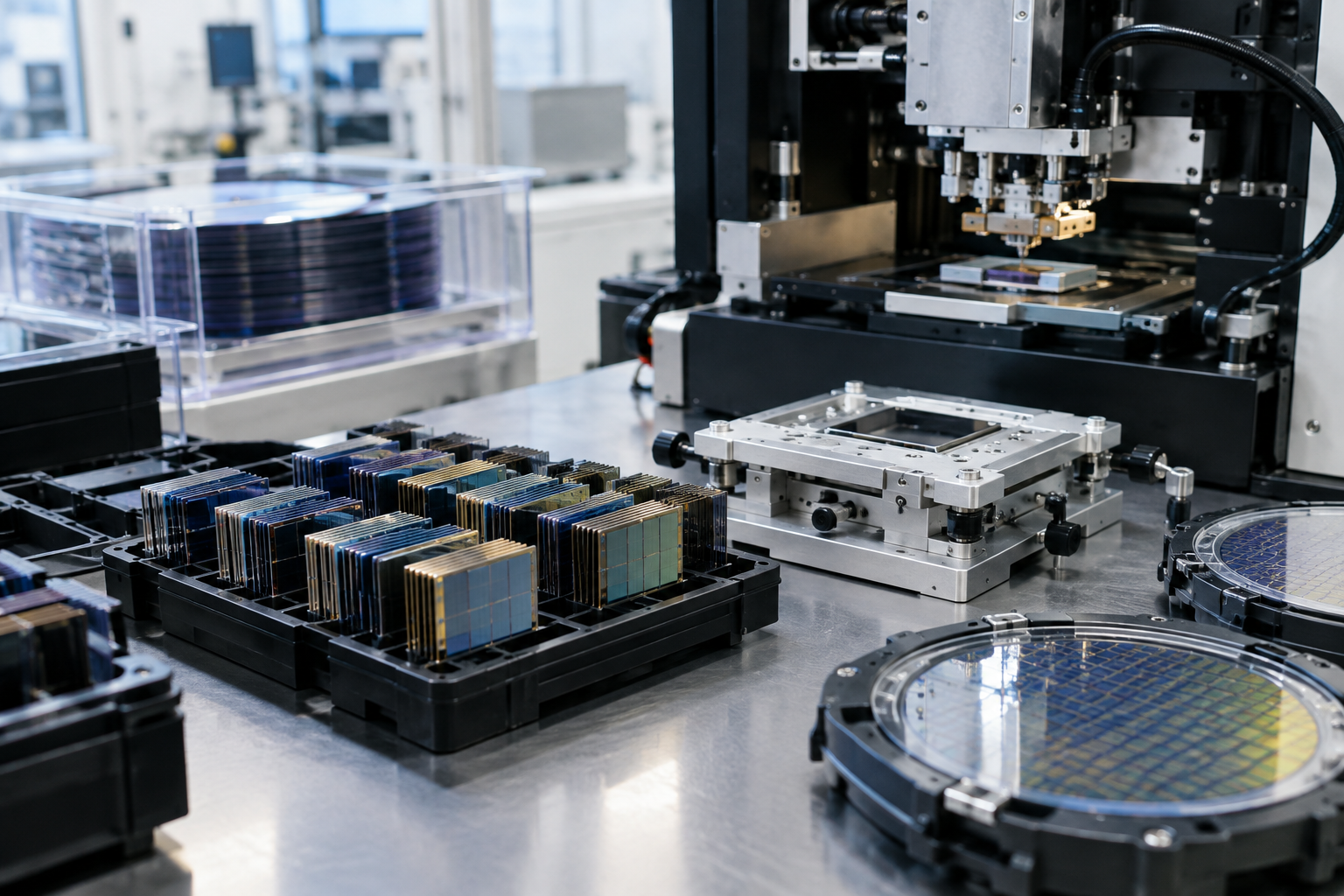
Micron Technology’s latest move puts the memory maker at the center of the AI trade again. $MU rose 1.4% to $1082.80 in the latest market wrap and ranked among the most active stocks, with the move attributed to stronger demand for high-bandwidth memory chips used in AI applications.
That price action gives traders a clear earnings question: can high-bandwidth memory demand remain strong while supply constraints persist? The answer could determine whether Micron extends its market momentum—and whether the company becomes a swing factor for Nasdaq technology sentiment.
According to the latest market wrap, Micron’s advance was tied to demand for high-bandwidth memory, or HBM. These chips are designed for AI applications that require substantial memory performance, making HBM demand a central variable in the current semiconductor cycle.
Why HBM demand matters into earnings
The reported 1.4% gain does not provide an earnings forecast, and the available information does not include revenue, profit, margin or guidance estimates. It does, however, show that investors are focusing on the connection between AI demand and Micron’s memory business ahead of results.
For the earnings reaction, the key issue may be durability. If demand for HBM remains strong, investors could view the AI-driven memory cycle as having further support. If demand appears less durable, the market may question whether the recent enthusiasm is already reflected in the stock’s latest move. Those are forward-looking questions, not reported outcomes.
Supply constraints create leverage—and expectations
CNBC highlighted Micron among Jim Cramer’s “6 stocks to buy” and said the company has “all the leverage” heading into earnings while memory supply constraints persist. That framing is important because constrained supply can make commentary on demand, production and availability especially market-sensitive.
The central trading tension is straightforward:
- Demand: Continued HBM demand for AI applications could reinforce the bullish interpretation of Micron’s position.
- Supply: Persistent memory supply constraints may support the view that Micron enters earnings with leverage.
- Expectations: The 1.4% move to $1082.80 means the market is already paying attention, even though no earnings estimates or company guidance are included in the available source material.
CNBC’s report adds an additional layer to the setup. As its coverage notes, Micron is being discussed as one of Cramer’s six selected stocks, while the company’s supply position is described as giving it “all the leverage” heading into earnings.
Micron as a Nasdaq technology swing factor
Micron’s importance extends beyond its own ticker. Because HBM is linked to AI applications, the company’s earnings discussion could influence how traders assess broader Nasdaq technology momentum. Strong commentary on HBM demand and constrained supply could support that momentum; less convincing commentary could put the recent AI-memory narrative under scrutiny.
The fact pattern is limited but meaningful: $MU rose 1.4% to $1082.80, was among the most active stocks, and drew attention for its HBM exposure. The next phase depends on what the company says about demand and supply—not on estimates that have not been provided.
Bull/Bear Verdict
Bull Case: The 1.4% rise to $1082.80, HBM demand tied to AI applications and persistent supply constraints could support Micron’s earnings setup.
Bear Case: If HBM demand proves less durable or supply constraints ease, the expectations reflected in the latest 1.4% move could face pressure.