
MISTRAS Group has put a bright, unmistakable number on the table: $20.35 per share in cash. That is the consideration H.I.G. Capital has agreed to pay under a definitive deal to acquire the Princeton Junction, New Jersey-based industrial technology company.
For holders of $MG, the announcement turns the stock into something of a market stopwatch. The central question is no longer simply what MISTRAS Group may be worth as a standalone business, but how the shares trade against the $20.35 cash reference—and how much uncertainty remains before that figure can become the closing consideration.
According to the company announcement, MISTRAS Group entered into the definitive agreement with H.I.G. Capital on September 18, 2026. The transaction is all-cash, giving investors a clean benchmark rather than a moving exchange ratio tied to another publicly traded company.
The $20.35 calculation
The offer creates an immediate reference point for event-driven and merger-arbitrage investors. Because no current MG share price was provided in the announcement materials, the spread cannot be quantified here. The framework, however, is straightforward: compare the current trading price of MG with $20.35.
If MG trades below the offer, the difference represents the market’s implied spread. In dollar terms, that is $20.35 minus the current MG price. The percentage spread can be viewed as that difference divided by the current MG price. The size of that gap may reflect the time investors expect the deal to take, alongside the possibility that the transaction does not close on the expected terms.
That distinction matters. A stock trading below a cash offer is not automatically a bargain; the discount may be the market’s way of pricing uncertainty. Conversely, a narrow spread may indicate that investors see less room—or less time—for the deal outcome to diverge from the stated consideration.
What could move the spread?
Competing bids could reshape the story. A higher proposal might push the valuation conversation beyond $20.35, although the assignment provides no indication that another bidder has emerged. Regulatory hurdles could also influence the path to closing, while deal timing may cause the spread to widen or narrow as expectations change.
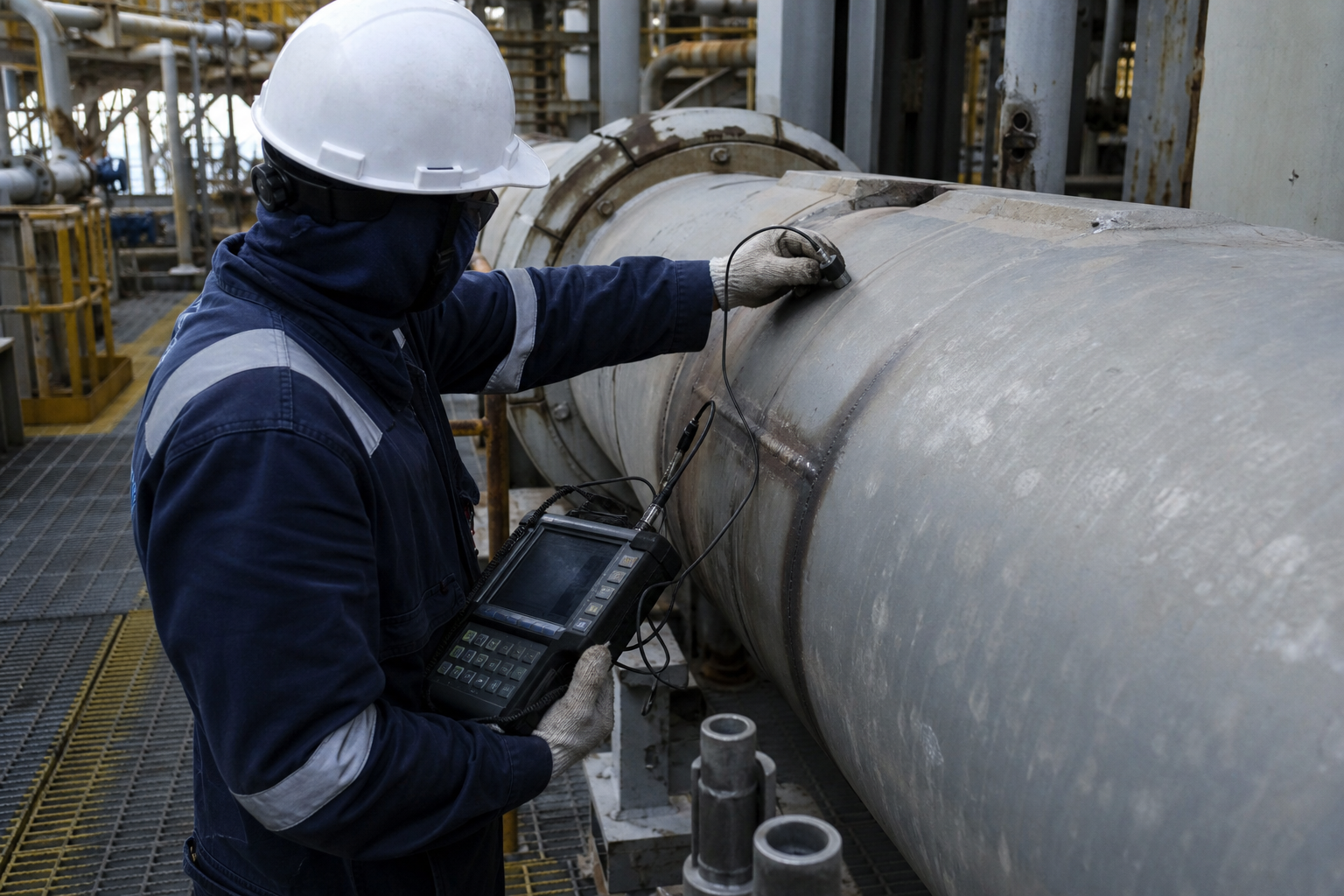
For MISTRAS Group, the strategic backdrop is its role as a global provider of technology-enabled industrial asset integrity and laboratory testing solutions. H.I.G. Capital’s agreement places that business inside a private-equity transaction, but the announcement does not provide additional terms, financing details or a closing date. Those missing pieces are important because the market must weigh the fixed cash consideration against the still-uncertain timetable and completion process.
The result is a classic event-driven setup: one hard number, $20.35, surrounded by variables. MG’s trading price may continue to reflect not only the offer itself, but also the market’s assessment of regulatory hurdles, possible competing interest and the time required to reach closing.
Bull/Bear Verdict
Bull Case: The $20.35-per-share all-cash agreement gives MG a defined valuation reference, while a competing bid could create the possibility of a higher offer.
Bear Case: MG could trade below $20.35 if regulatory hurdles, uncertain deal timing or failure to close cause the market to price completion risk into the spread.