
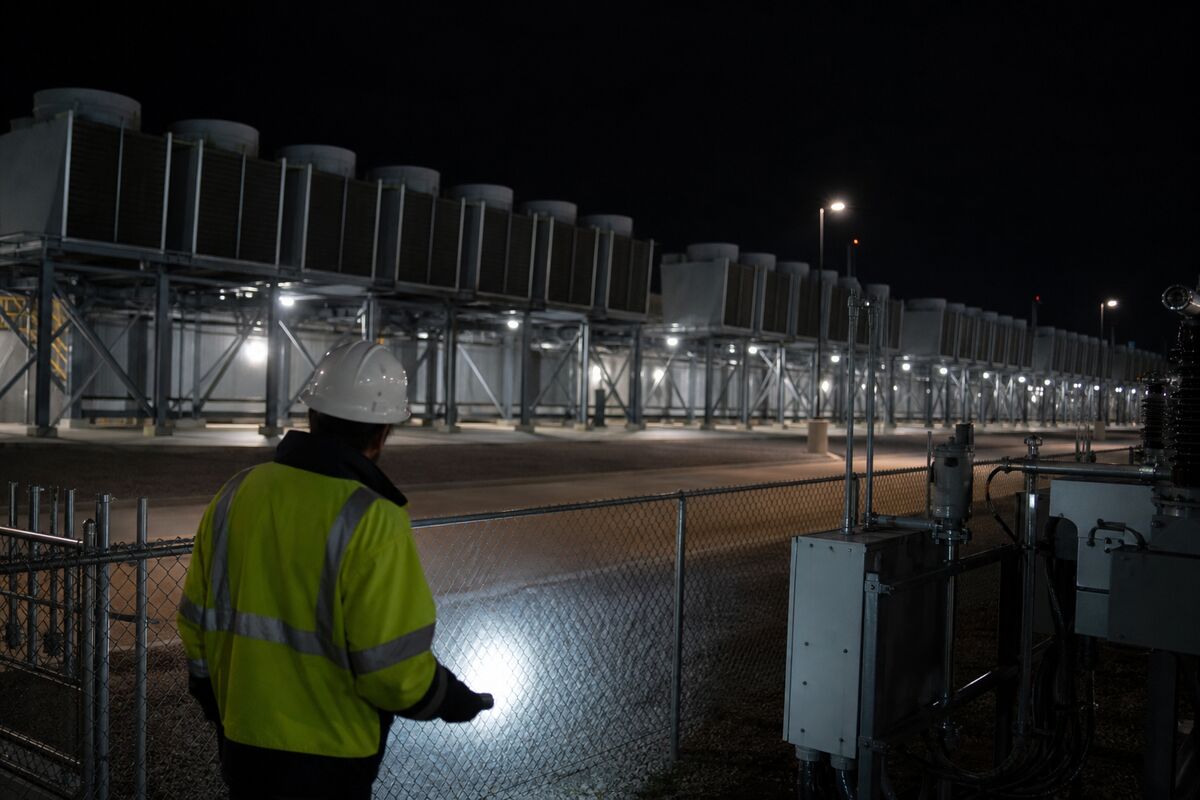
The Nasdaq Composite’s decline carried an unusual message beneath the red ink: investors may not be mourning every inch of data-center expansion. As semiconductor and data-center shares led the retreat, markets rotated toward defensive and cyclical sectors, suggesting that enthusiasm for an ever-faster artificial-intelligence infrastructure buildout is meeting a more complicated reality.
That reality is increasingly local. Around the midterms, 41 votes on data-center curbs took place, with 40 on track to pass. The figures do not prove that the industry-wide construction engine is slowing, but they do suggest that communities are becoming a meaningful variable in the hyperscaler spending story—and that markets may welcome a less aggressive pace.
The Nasdaq’s weakness therefore looks less like a simple verdict on technology and more like a debate over its timetable. For months, the data-center narrative has rested on enormous infrastructure requirements: more facilities, more power and more semiconductors to support expanding AI workloads. When the shares tied to that chain weaken together, investors may be reassessing how quickly those requirements become actual construction and capital spending.
Market commentary highlighted the possibility that investors are relieved by a slower hyperscaler-led buildout. That interpretation turns conventional market logic on its head. Usually, slower construction sounds like bad news for suppliers and infrastructure beneficiaries. But if spending expectations have become stretched, a more measured rollout could ease concerns about excess capacity, power constraints, local opposition and the durability of the AI investment cycle.
Local votes become a market variable
The 41 local votes—and the 40 considered on track to pass—matter because they put a political boundary around what has often been treated as a purely corporate spending question. Data-center construction depends not only on corporate budgets, but also on zoning, energy availability and community approval. Regulatory pushback could alter assumptions about the pace at which hyperscalers add capacity, even if demand for computing remains strong.
That does not mean every proposed facility will be delayed or that capital spending will contract across the technology sector. It means the market may begin assigning more weight to the friction between ambitious infrastructure plans and the places expected to host them. The difference between planned capacity and permitted capacity can be substantial, and investors may be starting to focus on that gap.
What the rotation says about risk appetite
The move toward defensive and cyclical sectors adds another layer to the message. During the pullback, capital did not simply vanish from the market; it rotated. That pattern may indicate a desire for exposure less dependent on the most aggressive assumptions surrounding AI infrastructure, semiconductor demand and hyperscaler expansion.
For data center REITs, the evolving debate could cut in more than one direction. A slower buildout may limit the pace of new development opportunities, while local curbs could complicate expansion plans. At the same time, a more disciplined construction cycle could make existing capacity more strategically important if demand continues to develop. The outcome remains unsettled, and the 40 votes on track to pass are signals of regulatory pressure—not confirmation of an industry-wide slowdown.
Technology investors face a similar distinction. The Nasdaq Composite’s decline and the weakness in semiconductor and data-center shares show that expectations can move before the underlying industry does. The market may be repricing the speed, sequencing and political feasibility of AI infrastructure spending rather than rejecting the technology itself.
That is why this pullback deserves attention. It places local regulation beside earnings, demand and capital budgets in the technology-sector conversation. The central question is no longer simply how much hyperscalers want to build. It is how quickly they can build, where they can build and whether investors prefer a grand plan that arrives at full speed—or one that proceeds with fewer collisions.
Bull/Bear Verdict
Bull Case: The Nasdaq pullback and rotation toward defensive and cyclical sectors may reflect healthier expectations, with a slower buildout potentially easing concerns about excess infrastructure spending while preserving long-term technology demand.
Bear Case: With 40 of 41 local data-center curb votes on track to pass, regulatory pushback could slow construction, limit opportunities for data center REITs and force investors to reduce assumptions about hyperscaler capital spending.