
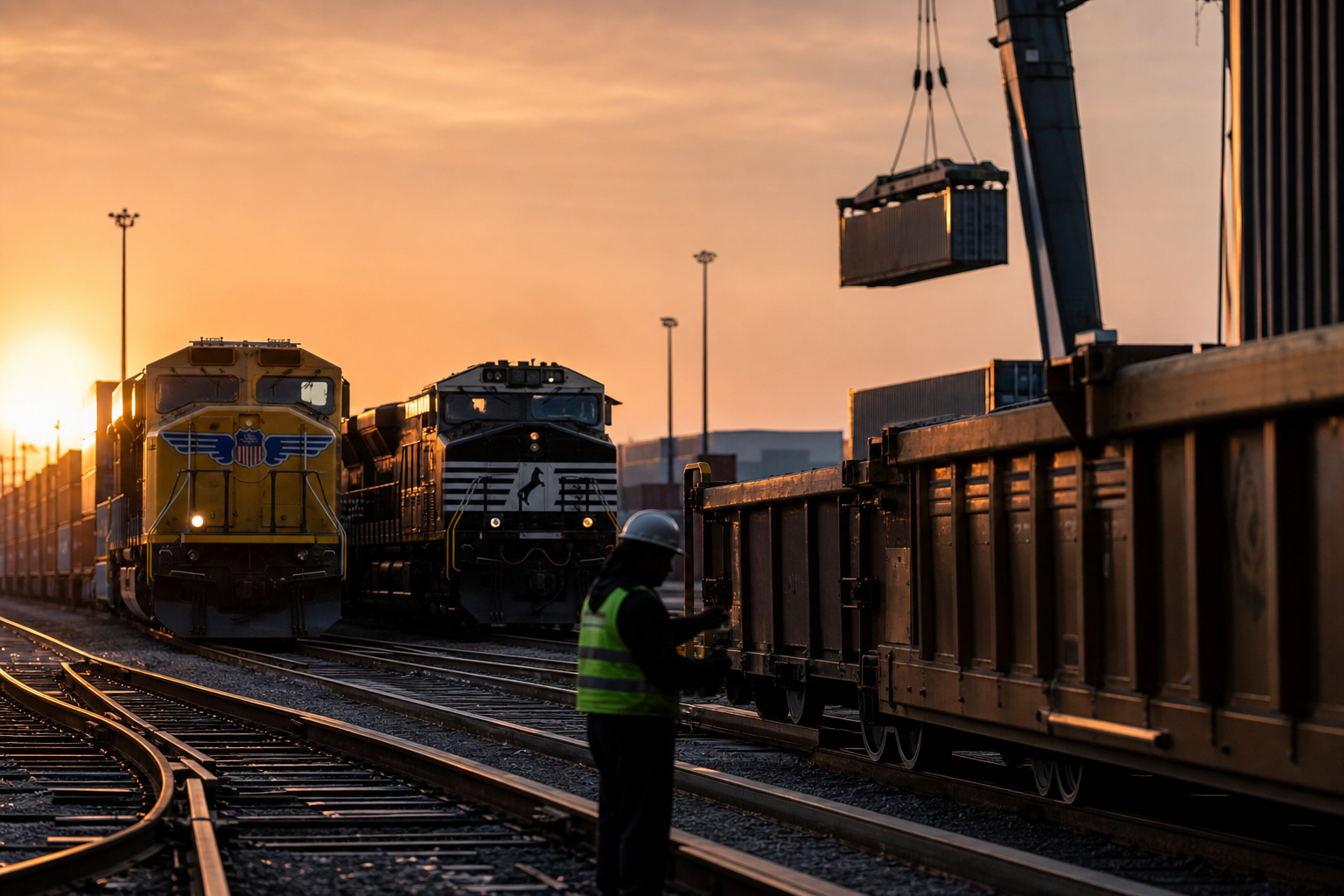
As the sun sets over the sprawling network of North American railroads, two titans of the industry, Union Pacific ($UNP) and Norfolk Southern ($NSC), have stepped into the spotlight with their recent filings to the Surface Transportation Board (STB). Dated July 7, 2026, these filings mark a crucial moment in the ongoing dialogue surrounding their proposed merger, a move that could send ripples through the freight rail landscape and impact commodity transport across the continent.
The STB, tasked with overseeing railroad mergers and ensuring competitive practices, will scrutinize the potential union of these two freight giants. The implications of this merger extend far beyond the corporate boardrooms; it could redefine how goods traverse the vast distances between producers and consumers. Investors, take note: this is a pivotal moment, and understanding the nuances of the regulatory environment is essential.
Unpacking the STB Filings
In their recent submissions, both Union Pacific and Norfolk Southern laid out their cases for the merger, highlighting anticipated efficiencies and enhanced service capabilities. The proposed merger aims to create a robust, integrated rail system capable of better meeting the demands of a growing economy. From increased capacity to improved logistics, the benefits touted by the two companies may resonate with stakeholders looking for a more streamlined approach to freight transport.
However, the STB's response will be critical. Investors should closely monitor the board's signals regarding approval timelines and stipulations that may accompany any green light. Regulatory hurdles are a common theme in the railroad industry, and the STB's past decisions provide a window into the complexities involved in such large-scale mergers.
The Broader Impact on Commodity Transport
The merger of Union Pacific and Norfolk Southern carries profound implications for the North American freight market. With combined networks stretching across vast territories, this merger could lead to a more competitive landscape, allowing for more efficient transport of commodities such as coal, agricultural products, and manufactured goods. This efficiency could, in theory, reduce shipping costs and enhance service reliability. Yet, it also raises concerns about market consolidation and the potential for reduced competition.
Investors should keep a keen eye on commodity prices and transportation costs as these developments unfold. The freight rail sector is a vital artery in the economy, and any shifts in capacity or pricing structures could reverberate through various industries, affecting everything from agricultural producers to manufacturers.
Regulatory Signals to Watch
As the STB evaluates the merger, several regulatory signals will be crucial for investors. First, pay attention to any public hearings or discussions that may arise. These forums often reveal the concerns of various stakeholders, including smaller rail companies and consumer advocacy groups. Additionally, the board's timeline for decision-making will be a key factor; delays could indicate deeper scrutiny and potential roadblocks.
Moreover, any conditions imposed on the merger could impact the operational strategies of both companies. For instance, if the STB mandates certain service obligations or divestitures, this could influence how $UNP and $NSC navigate their combined operations moving forward.
Investors are advised to keep a close watch on news from the STB and related industry commentary, as these insights could provide a clearer picture of the potential trajectory of both stocks. The freight rail sector is notoriously volatile, and understanding the regulatory landscape is paramount for making informed decisions.
In this high-stakes game of corporate consolidation, the merger between Union Pacific and Norfolk Southern could define the future of freight transport in North America. With the STB's response looming, traders and investors alike should stay alert, as the next moves from these rail giants could reshape the market landscape in ways we can only begin to imagine.
For more detailed insights on the STB filings, check out the full report on Seeking Alpha.