
SpaceX has turned the telecom trade into a two-way market. Verizon was headed for its worst trading day since 2002 after SpaceX announced a spectrum agreement with Grain Management, while AT&T and T-Mobile shares also came under pressure as investors assessed the implications of an expanded Starlink direct-to-cell network.
The sharpest message from the market was not simply that wireless carriers may face a new competitor. It was that the same announcement produced a divergent reaction across the telecom complex: incumbent carriers weakened, while telecom tower REIT stocks moved higher. That split gives traders a cleaner read on where investors see potential pressure—and where they see potential beneficiaries.
According to CNBC’s report, the agreement between SpaceX and Grain Management is intended to expand Starlink’s direct-to-cell network. The investment reaction suggests that the market is treating satellite-based connectivity as more than a technical experiment. It is being priced as a potential competitive force against established wireless networks.
Why Verizon took the hardest hit
Verizon’s reaction stands out because the stock was headed for its worst trading day since 2002. That historical comparison matters: investors are not treating the SpaceX announcement as routine sector news. They are reassessing the durability of the incumbent wireless model and the competitive assumptions embedded in it.
The immediate concern is pricing power. If satellite connectivity expands the reach of mobile service, traditional carriers could face additional pressure to defend customer relationships, service economics and network differentiation. The agreement does not establish that SpaceX will displace the major carriers. It does indicate that investors are considering whether Starlink direct-to-cell could narrow the advantage that incumbent networks have long held in areas where terrestrial coverage is less convenient or less available.
AT&T and T-Mobile were also affected as investors priced in the threat. The simultaneous pressure across the major wireless names suggests a sector-wide concern rather than a Verizon-specific problem. Competitive positioning and market share expectations may now be judged against a broader connectivity landscape, one in which satellite-based service could become an increasingly visible alternative or complement.
The unusual winner: telecom tower REITs
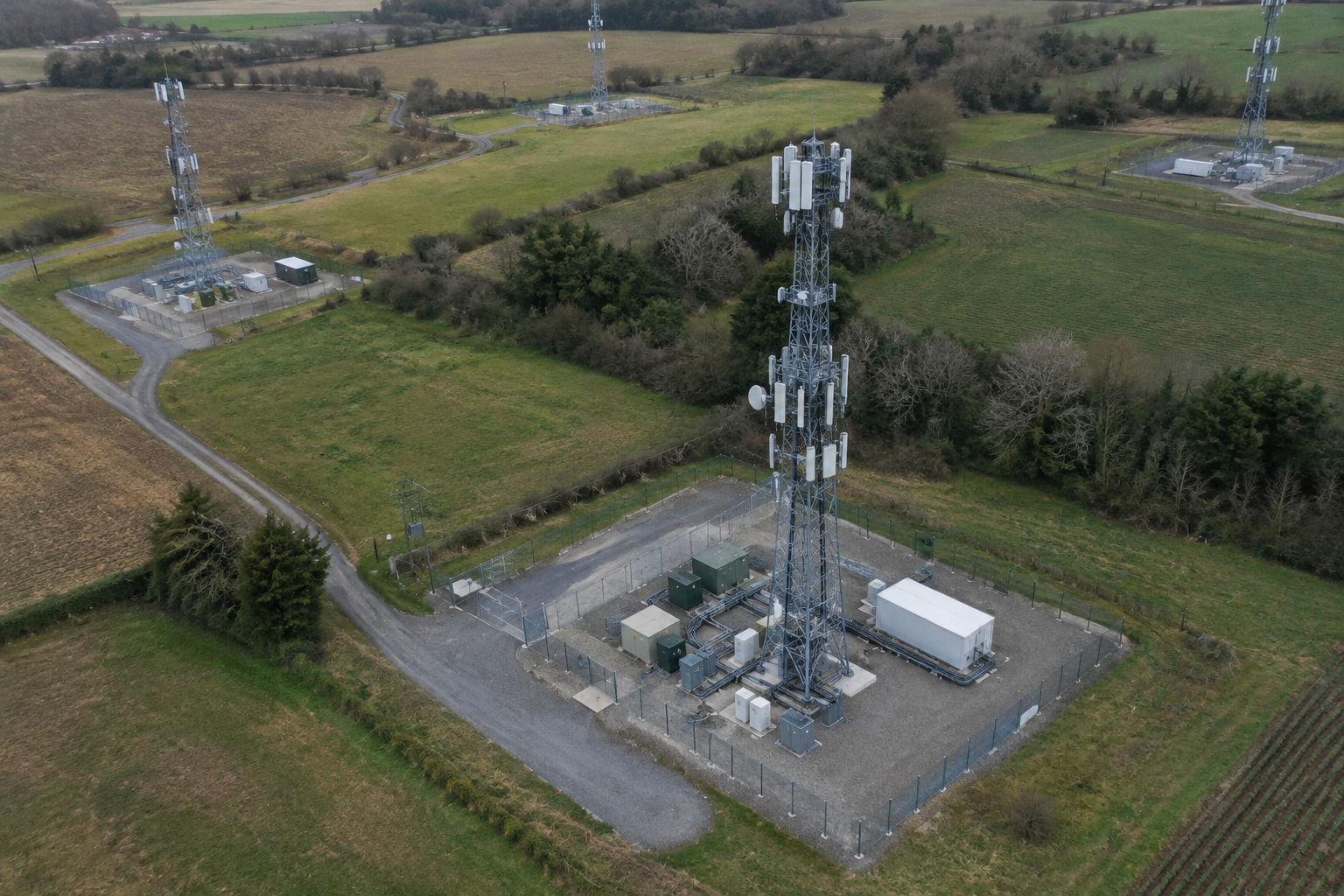
The other half of the trade is just as important. Telecom tower REIT stocks moved higher following the SpaceX-Grain Management news, according to Seeking Alpha’s coverage. That move creates a notable divergence within telecom infrastructure.
Investors appear to be distinguishing between companies that sell wireless connectivity directly and infrastructure owners positioned around the broader demand for network capacity. The rally does not eliminate uncertainty for tower REITs, but it shows that the market is not applying the same judgment to every part of the sector. SpaceX may be viewed as a competitive challenge to carriers while still reinforcing the importance of communications infrastructure.
Signals traders should monitor
The next test is whether the initial reaction becomes a sustained sector trend. Traders will likely watch follow-through in Verizon, AT&T and T-Mobile, particularly whether the pressure remains concentrated in wireless carriers or broadens across the telecom complex. For tower REITs, the key signal is whether the move higher holds as investors continue to evaluate the relationship between satellite connectivity and terrestrial infrastructure.
Investors will also be watching for further details on the SpaceX-Grain Management agreement and evidence of how the expanded Starlink direct-to-cell network could affect pricing, competitive positioning and market share. Until those signals emerge, the market’s verdict is clear but provisional: wireless incumbents face a newly elevated competitive question, while telecom infrastructure stocks are receiving a more constructive reading.
Bull/Bear Verdict
Bull Case: The higher move in telecom tower REIT stocks suggests investors may see expanded connectivity demand supporting infrastructure owners even as SpaceX’s spectrum agreement pressures wireless carriers.
Bear Case: Verizon’s expected worst trading day since 2002, alongside pressure in AT&T and T-Mobile, indicates that expanded Starlink direct-to-cell connectivity could challenge incumbent carriers’ pricing power, competitive positioning and market-share expectations.