
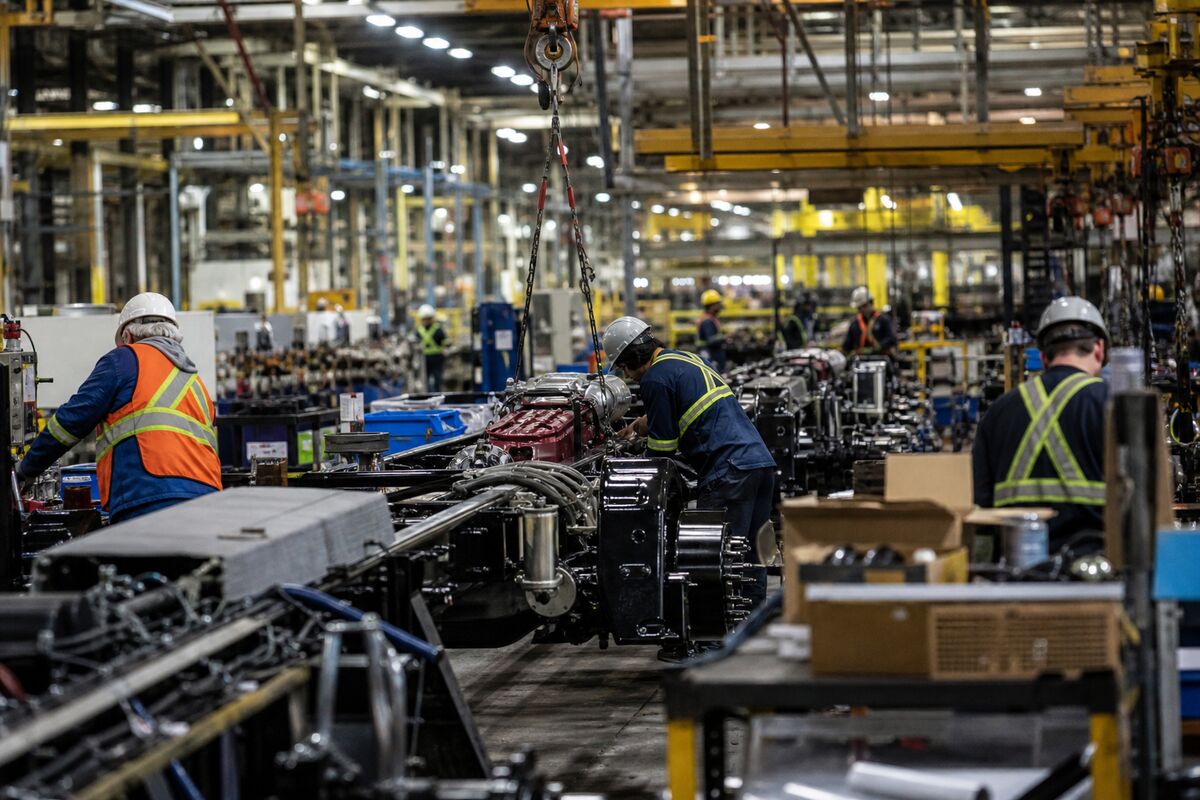
U.S. factories delivered a stronger pulse in September, with industrial production rising 0.7% compared with the 0.4% expected. Capacity utilization also climbed to 76.9%, topping the 76.5% forecast—an industrial double beat that gives traders a sturdier growth signal as the year-end market debate takes shape.
The report does not dictate the Federal Reserve’s next move, but it adds weight to the case that the economy may be retaining more momentum than softer indicators suggest. For Treasury traders, that resilience could keep attention focused on whether stronger activity may delay expectations for easier policy. For equity investors, it offers a more complicated backdrop: cyclical sentiment may find support, while inflation-sensitive rate concerns remain in the room.
September’s headline increase was not the only encouraging detail. The prior month’s industrial production reading was revised up to a 0.1% increase from no change. Manufacturing output rose 0.3%, matching expectations, while the previous reading was revised to a 0.2% decline from a 0.3% decline.
Those revisions matter because they turn the recent industrial picture slightly less fragile. Utilities output jumped 3.5%, while machinery output rose 1.4%. The figures point to strength across selected corners of the production data, rather than a headline beat resting entirely on one narrow detail.
Why capacity utilization matters
Capacity utilization is a useful pressure gauge for traders because it speaks to how much of the existing industrial base is being used. A reading of 76.9%, above the 76.5% expectation, may suggest firmer demand and a healthier operating backdrop. It can also keep inflation pressures on the radar if businesses face tighter production capacity or stronger input demand.
That does not mean the report establishes a new inflation trend. Manufacturing output rose only in line with expectations, and the data provide no direct evidence here of a Federal Reserve decision. Still, resilient production and higher utilization may encourage markets to reassess how quickly policy could become less restrictive, with potential implications for Treasury yields and year-end rate expectations.
The AI spending question
The industrial strength arrives alongside concerns about AI-driven capital expenditure and the broader technology trade. Robust machinery output, up 1.4%, may give cyclical investors a reason to examine the economy beyond technology-led investment themes. At the same time, one month of production data cannot settle whether AI-related spending is broadening into durable industrial demand or remaining concentrated within the technology cycle.
That tension leaves the market with competing narratives. The report’s 0.7% production gain and 76.9% utilization rate may support a more constructive reading of economic growth. But stronger activity could also make traders more cautious about assuming rapid relief in rates. As markets look toward year-end, the industrial data place the Federal Reserve’s growth-versus-inflation balancing act back in the spotlight.
For the full release details, see the September industrial production report.
Bull/Bear Verdict
Bull Case: The 0.7% production increase, upward revision to 0.1% for the prior month and 76.9% capacity utilization may signal resilient growth and support sentiment toward cyclical equities.
Bear Case: Stronger activity, including a 3.5% utilities gain and 1.4% rise in machinery output, could keep inflation and Federal Reserve rate expectations under scrutiny, limiting enthusiasm for a rapid easing outlook.