
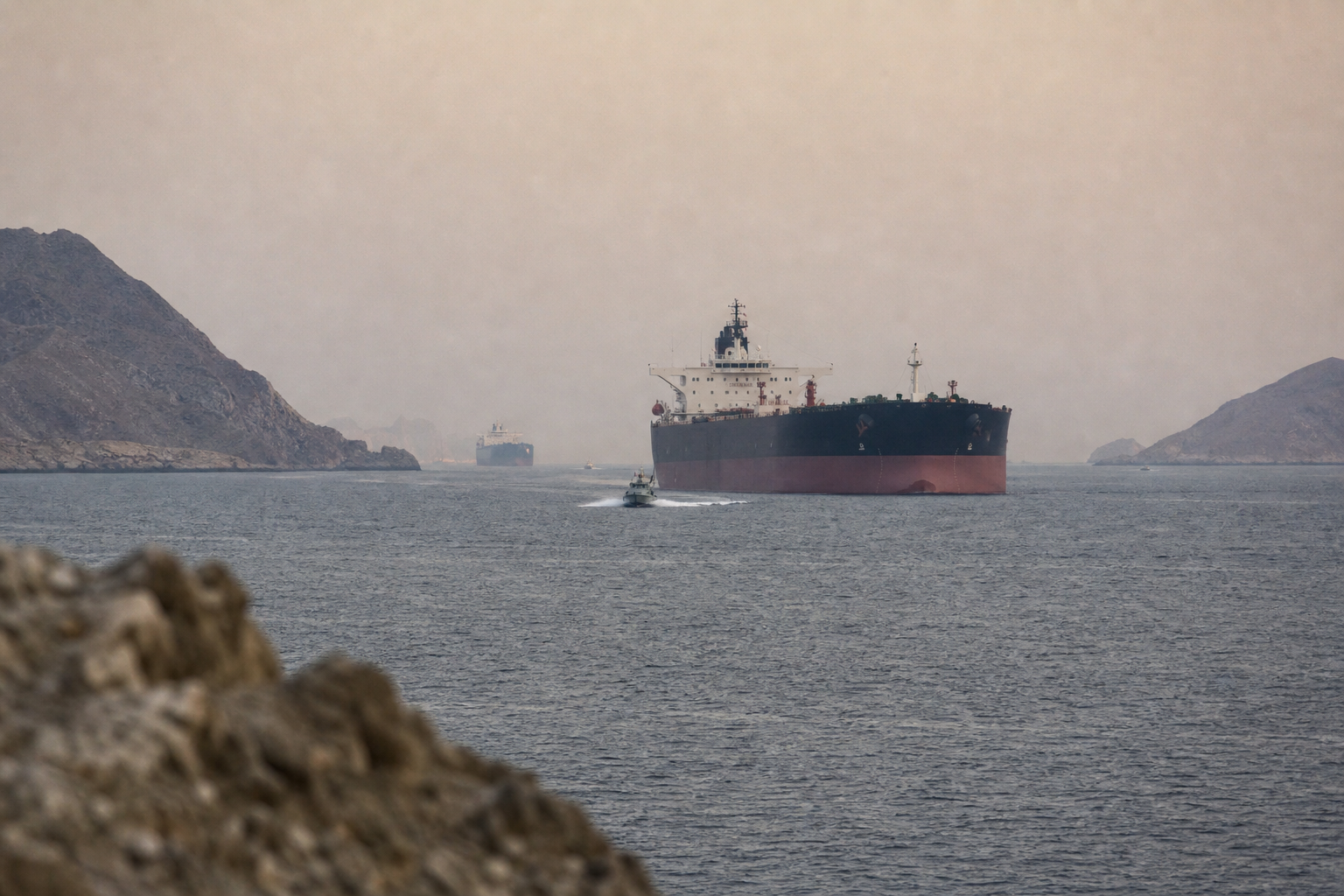
US markets are confronting a difficult macro combination: 30-year Treasury yields have reached their highest level since 2007, while the Strait of Hormuz remains closed and oil prices are rising. That mix puts long-duration assets under pressure because higher borrowing costs can compress the valuations assigned to growth and technology companies.
The immediate trading signal is coming from the bond market rather than from an individual technology stock. Reuters reported the latest 30-year yield milestone, while geopolitical developments around Hormuz are adding another layer of uncertainty for equities. As CNBC’s Jim Cramer put it, the bond market is “the story of the day.”
For traders, the key issue is transmission. The yield increase is linked to fears that an Iran war could reach a stalemate, alongside higher oil prices following the closure of the strategic waterway. Iran has said the Strait of Hormuz will remain closed until the US meets interim deal conditions. A vessel was also struck by an unknown projectile in the strait, with crew casualties reported.
Those developments matter to Wall Street because they can affect both inflation expectations and the discount rate applied to future corporate cash flows. The assignment does not provide a new inflation reading, a specific oil-price target or a forecast for Treasury yields. But the market message is clear: long-term rates are moving higher while geopolitical pressure is intensifying.
Why technology stocks are sensitive to long-term yields
Technology and other growth stocks are especially sensitive to changes in long-term rates because their valuations place substantial weight on cash flows expected further into the future. When the discount rate rises, the present value assigned to those future cash flows can be compressed. Reuters’ market account said higher yields were weighing on Wall Street technology stocks for precisely this reason.
This does not establish that every technology company will respond identically. It does indicate that the sector’s valuation framework is being tested by the bond market. A prolonged closure of Hormuz, continued oil-price pressure and uncertainty around the Iran situation could keep macroeconomic factors at the center of equity trading rather than company-specific news.
TLT and TNX on the trader’s dashboard
The symbols $TLT and $TNX are relevant to traders tracking this episode from different angles. $TLT is the bond-market ETF named in the assignment, making it a vehicle to monitor for the market’s response to higher long-term yields. $TNX is a rate-market gauge that traders can watch alongside the reported 30-year Treasury move.
- $TLT: A bond-market ETF to monitor as long-term Treasury yields rise.
- $TNX: A rate indicator relevant to tracking long-term Treasury-market stress.
- Technology stocks: Growth valuations may remain sensitive to further changes in long-term yields.
- Hormuz developments: The closure, Iran’s stated conditions and the reported vessel strike provide the geopolitical backdrop.
The practical takeaway is not a forecast but a framework. Traders can compare the direction of $TLT, $TNX and technology stocks to assess whether bond-market pressure is broadening into equity valuations. A weaker bond-market tone alongside continued technology-stock pressure would be consistent with the current rate-sensitive narrative; a change in that relationship would require fresh market data.
For now, the long end of the Treasury curve is carrying the market’s loudest signal. The 30-year yield’s highest level since 2007, higher oil prices and escalating Hormuz risks have created a macro setup in which rate sensitivity matters as much as sector momentum. Reuters’ report and Cramer’s CNBC commentary point to the same conclusion: the bond market is driving the conversation.
Bull/Bear Verdict
Bull Case: If the bond-market pressure stabilizes, technology-stock valuations may face less compression, while $TLT and $TNX could provide clearer signals that long-term rate stress is easing.
Bear Case: A continued 30-year yield at its highest level since 2007, combined with a closed Hormuz, higher oil prices and reported vessel casualties, could keep pressure on growth valuations and maintain focus on $TLT and $TNX.