
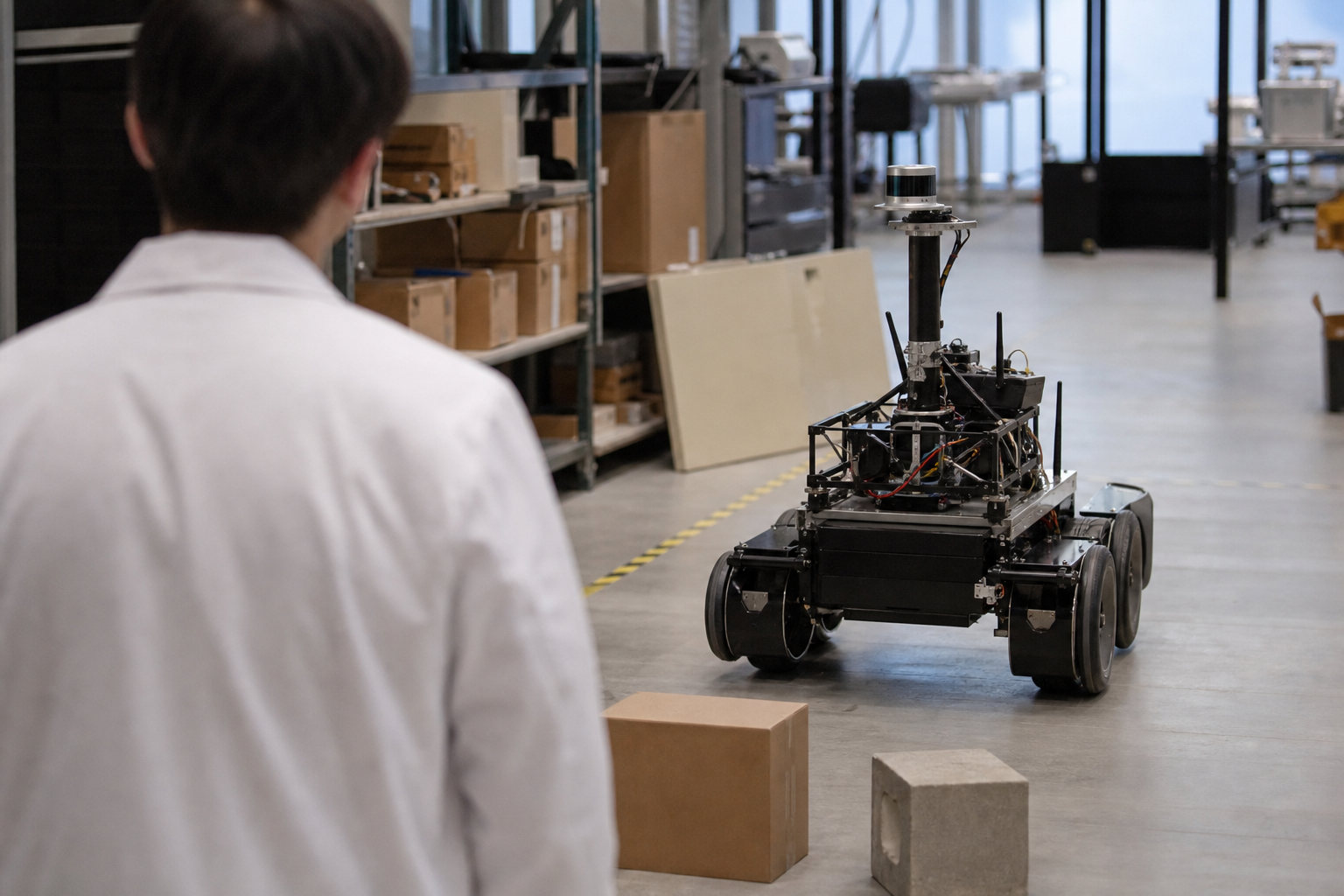
BlackBerry is no longer simply a legacy smartphone name trying to preserve relevance. Its QNX software business is moving into robotics and physical AI, and that shift could force the market to reassess the dual-listed technology company under the ticker $BB.
The immediate signal is clear: CEO John Giamatteo says robotics is now one of QNX’s fastest-growing business lines. That is confirmed business momentum—not proof of a completed transformation, but a meaningful indication that BlackBerry’s most important software asset is finding applications beyond the automobile.
For traders and growth-focused investors watching AI infrastructure and embedded software, this is the part of the BlackBerry story that deserves attention. The company is actively expanding QNX beyond automotive into physical AI and robotics applications, placing its software closer to machines that operate in the real world rather than limiting its opportunity to connected vehicles.
That distinction matters. The market has spent years associating BlackBerry with its past. QNX offers a different framework: software designed for embedded systems, now being positioned for use across a broader range of intelligent machines. If that expansion continues, $BB may increasingly be viewed not as a shrinking legacy software company, but as a potential platform participant in robotics and physical AI.
QNX Has an Existing Embedded-Software Foundation
BlackBerry is not approaching robotics from a standing start. QNX already has a presence in millions of vehicles, giving the company an established foundation in embedded software. That installed presence may help explain why management sees an opportunity to extend QNX into adjacent categories where reliability and machine-level software are central requirements.
But investors should keep the distinction sharp: an automotive footprint does not automatically translate into robotics adoption. The vehicle business may provide relevant experience and a platform foundation, yet robotics represents a separate commercial opportunity. The company still has to demonstrate that QNX can convert its automotive credibility into durable adoption across robotics and physical AI applications.
The Catalyst—and the Question Mark
Giamatteo’s characterization of robotics as one of QNX’s fastest-growing businesses gives the pivot a level of specificity that broad strategic language often lacks. It identifies a business line with current momentum, rather than merely describing robotics as a distant possibility. That could make the theme particularly relevant to momentum traders tracking corporate exposure to AI infrastructure.
Still, the longer-term investment case remains dependent on execution. The assignment provides no robotics revenue figure, contract value, financial forecast or share-price data. That means the prudent conclusion is not that BlackBerry has already become a robotics company. The stronger conclusion is that QNX is expanding its addressable opportunity, while the financial significance of that expansion remains to be established.
The broader transformation is outlined in CNBC’s report on QNX, robotics and physical AI. For the market, the key question is whether management can turn QNX’s existing embedded-software position into a wider platform role.
What the Market May Watch Next
- Whether robotics remains among QNX’s fastest-growing business lines.
- Whether BlackBerry can expand QNX adoption beyond automotive into physical AI applications.
- Whether the company’s presence in millions of vehicles supports credibility without being mistaken for guaranteed robotics demand.
- Whether the strategy changes how investors classify the dual-listed U.S. and Canadian technology name.
BlackBerry’s pivot is therefore best understood as a potential catalyst, not a finished result. The confirmed development is QNX’s expansion and the CEO’s statement about robotics growth. The larger payoff—whether that expansion materially changes BlackBerry’s business profile—remains a question of execution.
Bull/Bear Verdict
Bull Case: QNX’s status as one of BlackBerry’s fastest-growing business lines in robotics, combined with its presence in millions of vehicles, may give $BB a credible foundation in physical AI and embedded software.
Bear Case: Automotive adoption does not automatically translate into robotics demand, and without robotics revenue, contract or forecast data, the financial impact of QNX’s expansion remains uncertain.