
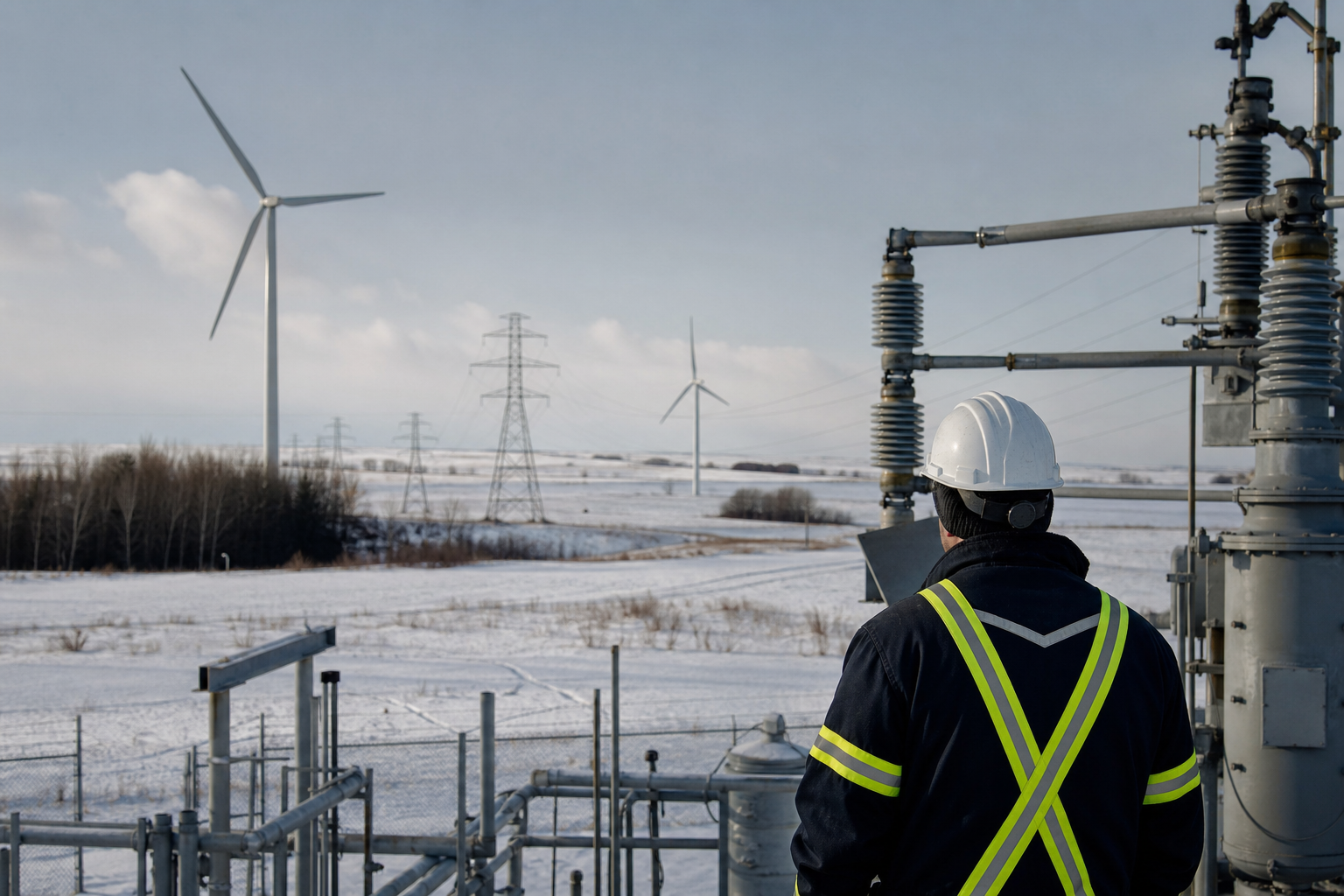
Boralex’s exit from the Toronto Stock Exchange marks more than the completion of a single takeover. With Brookfield and La Caisse completing their acquisition on August 14, 2026, one of Canada’s largest independent renewable-power producers is moving into private ownership—and the publicly investable universe for Canadian clean-energy exposure is getting smaller.
The transaction also puts institutional demand in sharp focus. Brookfield, La Caisse—formerly CDPQ—and Brookfield’s institutional partners, including Brookfield Renewable Partners, participated in the deal. Their joint acquisition of Boralex suggests that major infrastructure investors continue to see strategic value in renewable-power assets, even as access to those assets through public markets becomes more limited.
According to the companies’ August 14 announcement, the acquisition has closed. Boralex shares will cease trading on the TSX following the deal’s close, ending the public-market chapter for the company under the ticker $BLX.
A smaller Canadian clean-energy stock universe
Boralex’s departure matters because it removes an established renewable-power company from Canada’s listed equity market. The assignment describes Boralex as one of the country’s largest independent renewable-power producers, giving the transaction significance beyond the mechanics of a single corporate acquisition.
For market participants tracking publicly traded Canadian clean-energy companies, the immediate implication is straightforward: there is now one fewer TSX-listed name available for direct equity exposure to the sector. That reduction could make the remaining listed renewable-energy companies more visible by comparison, although any valuation re-rating or increased investor attention would be a potential market response—not a confirmed outcome.
The change also highlights a structural tension in renewable infrastructure. Public markets provide daily trading and transparent price discovery, while private ownership can give large institutions a longer-term framework for owning and managing infrastructure assets. Boralex’s transition does not establish that private ownership is preferable; it does show that major Canadian institutions were willing to acquire a renewable-power platform jointly and remove it from public trading.
What the buyers’ participation signals
Brookfield’s involvement carries an additional dimension because its institutional partners, including Brookfield Renewable Partners, participated in the transaction. La Caisse’s participation adds another major Canadian infrastructure investor to the buyer group. Together, the parties represent substantial institutional interest in renewable-power ownership, though the announcement provides no transaction terms or financial metrics from which to quantify that demand.
Brookfield Corporation, which is associated with the ticker $BN in the assignment, and La Caisse are not simply passive market observers in this deal. Their joint move signals a willingness by large institutions to commit to a renewable-energy company at the ownership level. That may prompt investors to reassess how much clean-power exposure remains available through Canadian public equities—and how much of the sector is increasingly held outside listed markets.
The remaining public-market question
The key market question now shifts to the renewable-energy companies that remain listed on the TSX. Boralex’s removal could make those businesses more prominent in sector comparisons, particularly for investors seeking Canadian-listed clean-power exposure. It could also reinforce the scarcity value of public renewable-energy assets, but that interpretation remains prospective rather than proven.
For now, the confirmed facts are narrower: the acquisition is complete, Boralex is becoming privately owned, and $BLX is leaving the TSX. The broader signal is that institutional demand for clean-power infrastructure can coexist with a shrinking supply of publicly traded Canadian renewable-energy stocks.
Bull/Bear Verdict
Bull Case: The completed acquisition and participation of Brookfield, La Caisse, and Brookfield Renewable Partners may reinforce the case that institutional demand for renewable-power assets remains strong, while the removal of $BLX could increase attention on remaining TSX-listed clean-energy companies.
Bear Case: With $BLX leaving the TSX, investors lose one publicly traded Canadian renewable-power company, and any re-rating of remaining peers is uncertain because the announcement provides no share-price, valuation, or transaction-term data.