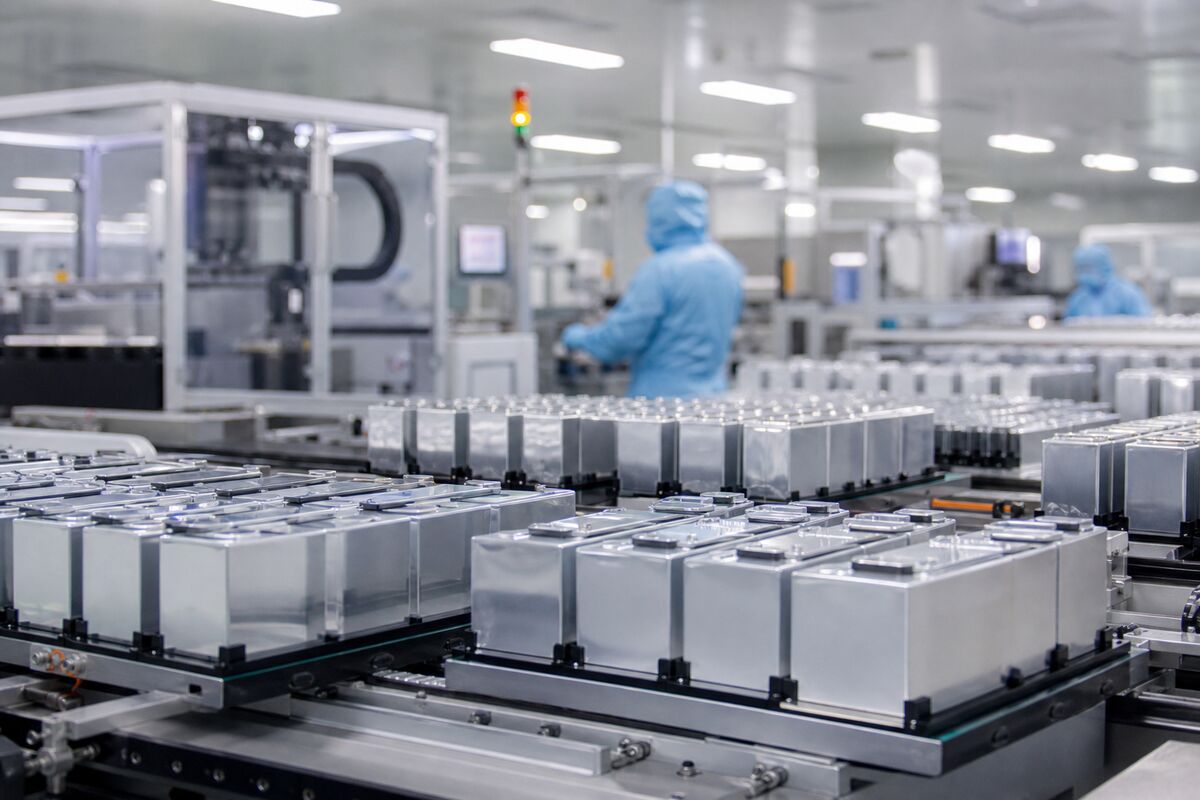
Ford’s domestic battery strategy has arrived at an uncomfortable conclusion: building cells in the United States does not necessarily mean escaping China’s influence. The company has started U.S. production and shipments of battery cells for its next-generation electric vehicles, but those cells use technology licensed by Chinese battery company CATL.
That makes Ford’s move more than a manufacturing milestone. It is a test of whether U.S. EV production can become domestically rooted while still relying on Chinese technology. For investors watching Ford Motor Co. ($F), the central issue is not simply where the cells are made. It is how much control Ford ultimately has over the technology, economics and policy risks attached to that production.
Ford’s decision reflects the practical difficulty of building an electric-vehicle supply chain from the ground up. Battery cells are a foundational part of EV manufacturing, and the technology behind them can influence production economics, vehicle execution and the ability to scale a new generation of electric vehicles. By using CATL technology under license, Ford appears to be pursuing a route that combines U.S. manufacturing with established Chinese battery expertise.
That arrangement may offer strategic advantages. Ford can produce and ship cells domestically while using technology developed by a company with a significant position in the battery sector. The structure could help Ford move its next-generation EV program forward without treating domestic production and technological capability as mutually exclusive goals.
But the same structure creates the strategic tension at the heart of the deal. Ford’s domestic production goals are tied to a technology relationship with a Chinese company at a time when the United States and China remain engaged in broader disputes over technology supply chains. The factory location may be American, yet the technology link remains international and politically sensitive.
Domestic production is not the same as domestic control
For Ford, the distinction matters. A battery cell made in the United States may reduce some forms of supply-chain dependence, but licensed technology can preserve another form of exposure. The company may have more direct control over manufacturing and shipments, while remaining exposed to questions surrounding the technology’s origin, licensing relationship and future policy treatment.
This is where the CATL relationship tests the limits of U.S. EV supply-chain policy. Policymakers may want battery production, advanced manufacturing and electric-vehicle capacity located inside the United States. At the same time, they may seek to limit reliance on Chinese companies or Chinese-developed technology in strategically important industries. Ford’s approach sits directly between those objectives.
The tension does not automatically make the strategy unworkable. It does, however, make execution more complicated. Any change in U.S.-China technology policy could affect how Ford manages the relationship, how it supports production and how it assesses the costs of maintaining the supply chain. Policy uncertainty can matter even before a formal restriction arrives, because companies may need to plan around several possible outcomes at once.
For investors, that creates a different risk profile from a conventional domestic manufacturing expansion. Ford’s U.S. production and shipments indicate that the company has moved beyond a purely conceptual battery plan. Yet the use of CATL-licensed technology means the project remains connected to developments outside Ford’s direct control. Geopolitical tensions could affect supply-chain decisions, technology access or the cost and complexity of execution.
The manufacturing economics question
Manufacturing economics will be another important part of the story. Ford is attempting to align U.S. production with the requirements of next-generation EVs, but domestic operations do not eliminate the economic pressures associated with battery manufacturing. The technology relationship may help Ford pursue production, but policy changes could alter the cost of maintaining that structure or require adjustments to the way the technology is used.
That leaves investors with two competing interpretations. The constructive view is that Ford has found a way to combine domestic cell production with CATL’s licensed technology, potentially supporting its EV ambitions while keeping manufacturing activity in the United States. The more cautious interpretation is that the company has created a supply chain that is domestic in location but still vulnerable to U.S.-China technology tensions.
Neither interpretation should be reduced to a simple question of whether Ford is “dependent” on China. The more useful question is where the dependencies sit. Ford is now producing and shipping cells in the United States, but its use of CATL-licensed technology shows that supply-chain resilience includes intellectual property, licensing and policy access—not merely factories and physical shipments.
What it means for the broader EV sector
Ford’s development also carries implications for the broader U.S. electric-vehicle and battery sectors. If domestic manufacturers can use licensed foreign technology while producing cells inside the country, that model could become one path toward faster industrial development. It would recognize the reality that technological expertise is distributed globally, even as governments push for more local production.
But the model also exposes the limits of a purely geographic definition of supply-chain security. A U.S.-based factory can still be affected by technology policy, diplomatic friction and changes in the rules governing Chinese relationships. That makes Ford’s battery strategy a useful case study in the difference between manufacturing localization and full strategic independence.
The next phase will be defined by execution and policy. Ford has started production and shipments, which gives the company a tangible operating position. The unresolved question is whether that position remains economically and politically workable as U.S.-China technology tensions evolve. For holders and analysts of $F, the CATL connection should therefore be viewed neither as an automatic negative nor as a complete solution to Ford’s EV challenge. It is a calculated compromise: domestic output supported by foreign technology, with the benefits and vulnerabilities that come with both.
As CNBC reported, Ford has begun U.S. production and shipments of the cells, while the underlying technology is licensed from CATL. That combination is the essential fact investors need to track. It shows progress toward a U.S. EV supply chain, but it also demonstrates why the boundary between domestic manufacturing and geopolitical exposure is becoming increasingly difficult to draw.
Bull/Bear Verdict
Bull Case: Ford’s U.S. production and shipments of battery cells using CATL-licensed technology may help advance its next-generation EV program while combining domestic manufacturing with established battery expertise.
Bear Case: Ford’s reliance on CATL-licensed technology could leave its U.S. EV supply chain exposed to changing U.S.-China technology policies, potentially complicating costs and execution.