
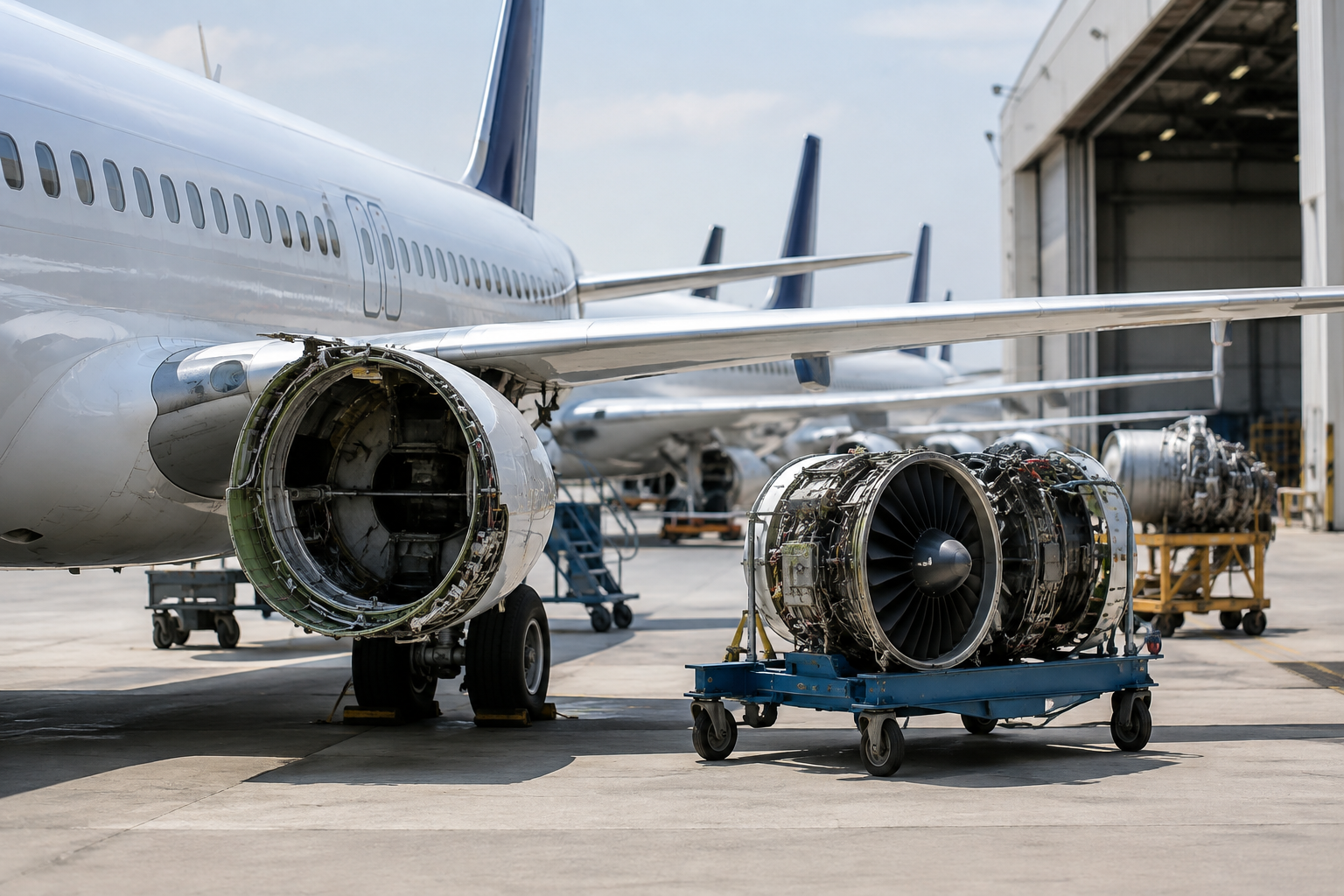
FTAI Infrastructure is building a portfolio that looks less like a single-lane infrastructure operator and more like a crossroads. On September 28, 2026, the company announced one expansion into Texas crude-oil logistics and another involving 27 Boeing 737-700 aircraft acquired from Canadian carrier WestJet.
For investors tracking $FIP, the significance is not simply the number of assets changing hands. The two transactions place energy infrastructure, aviation leasing and aerospace products under the same listed-company umbrella, raising a central portfolio question: does this broader mix create useful diversification, or does it make the business harder to assess as one coherent infrastructure story?
A Texas foothold in crude logistics
FTAI Energy Partners LLC, a subsidiary of FTAI Infrastructure Inc., agreed to acquire the Port Arthur Terminal in Texas and related crude oil logistics assets from USD Group. The transaction expands FTAI Infrastructure’s operating footprint into a physical energy-logistics network tied to the United States.
That matters because a terminal and associated logistics assets represent a different operating profile from aircraft. The Port Arthur transaction gives $FIP exposure to infrastructure connected with the movement and handling of crude oil, while keeping the company’s expansion anchored in a defined US market: Texas.
The announcement does not provide a purchase price, expected financial contribution or integration plan. Those omissions are important for analysis. Investors can identify the strategic direction, but not quantify the transaction’s effect from the supplied information. The available fact pattern is therefore about scope and diversification, not a forecast of financial performance.
WestJet deal adds two aviation pathways
Separately, FTAI acquired 27 Boeing 737-700 aircraft from WestJet. The aircraft transaction is divided into two distinct channels, which gives the deal more texture than a simple fleet purchase.
First, 17 aircraft are included in a sale-leaseback with Strategic Capital’s second investment vehicle. That structure places part of the transaction within an aviation-leasing framework. FTAI is therefore expanding its exposure to aircraft assets while involving an investment vehicle associated with Strategic Capital.
Second, FTAI agreed to acquire 10 off-lease aircraft outright to support its aerospace products business. Those aircraft are not described as part of the sale-leaseback; they are tied instead to FTAI’s aerospace-products activity. Taken together, the 17-aircraft sale-leaseback and 10-aircraft outright acquisition account for the 27 aircraft announced in the transaction.
The distinction is relevant for investors examining how FTAI approaches aviation assets. One portion is linked to leasing, while the other is intended to support aerospace products. The deal thus broadens the company’s aviation exposure across both asset ownership and an aerospace-oriented operating use.
One company, several infrastructure lenses
Read alongside the Port Arthur agreement, the WestJet transaction presents a deliberately wide operating footprint. Energy investors may focus on the Texas terminal and crude-logistics assets. Aviation investors may focus on the Boeing 737-700 portfolio and the sale-leaseback. Industrial-asset investors may look at the outright acquisition of 10 off-lease aircraft for aerospace products.
There is also a cross-border dimension. The energy transaction centers on assets in Texas, while the aviation deal involves WestJet, a Canadian carrier. That gives the announcements relevance beyond a single domestic asset class, although the supplied information does not detail transaction terms, regulatory conditions or future operating arrangements.
The market-analysis challenge is straightforward but consequential: diversification can widen the set of assets and businesses available to a company, yet it can also leave investors comparing very different economic engines. A crude terminal, leased aircraft and off-lease aircraft intended for aerospace products may each require different measures of operating progress. The announcements establish that FTAI Infrastructure is expanding across those categories; they do not establish how the pieces will perform relative to one another.
The portfolio question for investors
Investors tracking infrastructure M&A should watch how the company’s identity develops after these two September 28 announcements. Will $FIP increasingly be understood as a diversified owner and operator of industrial assets, or will energy logistics, aviation leasing and aerospace products remain separate strands within a broader platform?
For now, the evidence supports a measured conclusion. FTAI Infrastructure is extending its reach through a Texas crude-logistics acquisition and a 27-aircraft transaction involving WestJet. The first adds energy infrastructure; the second combines a 17-aircraft sale-leaseback with 10 off-lease aircraft intended for aerospace products. Investors have a clearer map of the company’s expanding territory, but not yet the financial coordinates needed to judge the ultimate contribution of each move.
The original announcements are available through FTAI Energy Partners’ Port Arthur transaction release and FTAI’s WestJet aircraft announcement.
Bull/Bear Verdict
Bull Case: The two September 28 transactions may broaden $FIP’s platform across a Texas crude terminal, related logistics assets, 17 sale-leaseback aircraft and 10 off-lease aircraft supporting aerospace products.
Bear Case: The wider portfolio could make $FIP more difficult to evaluate because energy logistics, aircraft leasing and aerospace products involve different asset profiles, while no purchase prices or expected financial contributions were provided.