
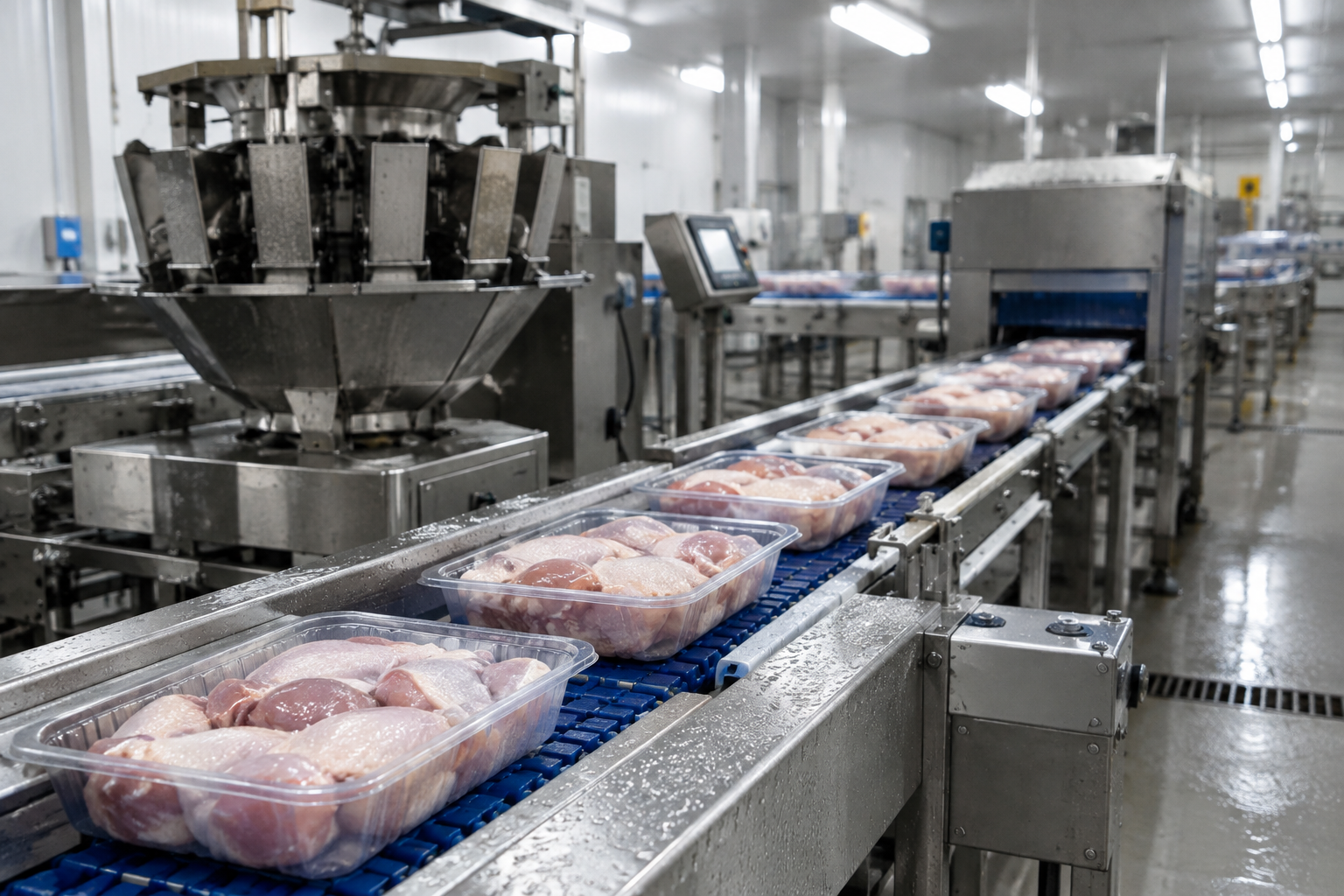
Hormel Foods’ agreement to acquire Brakebush Brothers for approximately $1.055 billion gives investors a clear strategic theme: expand deeper into protein and poultry supply chains. It also puts a hard number on the capital commitment, turning a growth narrative into a balance-sheet and execution test.
The transaction, reported through the Seeking Alpha M&A feed, may strengthen Hormel’s position in poultry, but the strategic logic will ultimately be judged against financing costs, leverage, integration demands and the company’s ability to protect margins in a competitive packaged-food market.
A $1.055 Billion Bet on Protein
The headline figure is approximately $1.055 billion. That is the central data point for assessing the deal: Hormel is committing more than $1 billion to expand its presence in protein through the acquisition of Brakebush Brothers.
Strategically, the purchase could give Hormel a broader role across poultry-related supply chains. A larger poultry platform may expand the company’s exposure to protein demand and add scale to its packaged-food portfolio. However, the available transaction information does not specify Brakebush’s revenue, earnings, production capacity or geographic footprint. Those missing figures will matter when investors assess whether the purchase price is supported by the acquired business’s financial contribution.
Financing and Leverage Move to the Foreground
For Hormel shareholders, the next questions are financial rather than rhetorical. How will the company fund the approximately $1.055 billion purchase? What will leverage look like after closing? And how quickly could the acquisition contribute to operating performance?
- Financing: The transaction announcement data provided does not identify the mix of cash, debt or other funding sources.
- Leverage: No post-deal debt figure or leverage ratio was provided, leaving the balance-sheet effect unresolved.
- Integration: The source does not disclose expected integration costs, timing or projected savings.
- Margins: There is no published estimate in the assignment for the deal’s effect on Hormel’s margins.
That uncertainty does not negate the strategic rationale. It does mean investors may focus less on the acquisition’s headline size and more on the eventual financial disclosures. A deal of approximately $1.055 billion can create scale, but scale only becomes meaningful if integration supports efficient operations and does not place undue pressure on margins.
Competition Raises the Standard
The acquisition also lands within a competitive packaged-food and protein landscape. Tyson and Pilgrim’s Pride are relevant comparison points for investors evaluating Hormel’s poultry ambitions. The available source does not provide operating comparisons, market-share figures or valuation data for any of these companies, so the strategic comparison should remain qualitative.
Hormel may seek to improve its competitive positioning by adding Brakebush’s poultry capabilities to its existing portfolio. The move could make protein diversification more important to the company’s long-term strategy. At the same time, rivals with established poultry exposure may limit the benefits Hormel can capture if competition remains intense.
Food Inflation Adds a Complication
Persistent food inflation creates another layer of uncertainty. Higher input and operating costs can pressure packaged-food margins, while competitive pricing may limit how fully companies pass those costs through to customers. The assignment provides no inflation rate or margin forecast, but the environment makes post-acquisition execution especially important.
The investment case therefore rests on a chain of conditions: Brakebush must add meaningful poultry capability, Hormel must finance the purchase without excessive balance-sheet strain, and integration must support rather than dilute margins. Until the company provides more detail, the $1.055 billion price tag is best viewed as a strategic commitment with measurable financial questions still open.
Bull/Bear Verdict
Bull Case: The approximately $1.055 billion Brakebush acquisition could expand Hormel’s position in protein and poultry supply chains, potentially strengthening its competitive platform if integration supports margins.
Bear Case: Financing, leverage, integration costs and margin effects remain undisclosed, creating uncertainty over whether the $1.055 billion commitment will translate into durable strategic value.