
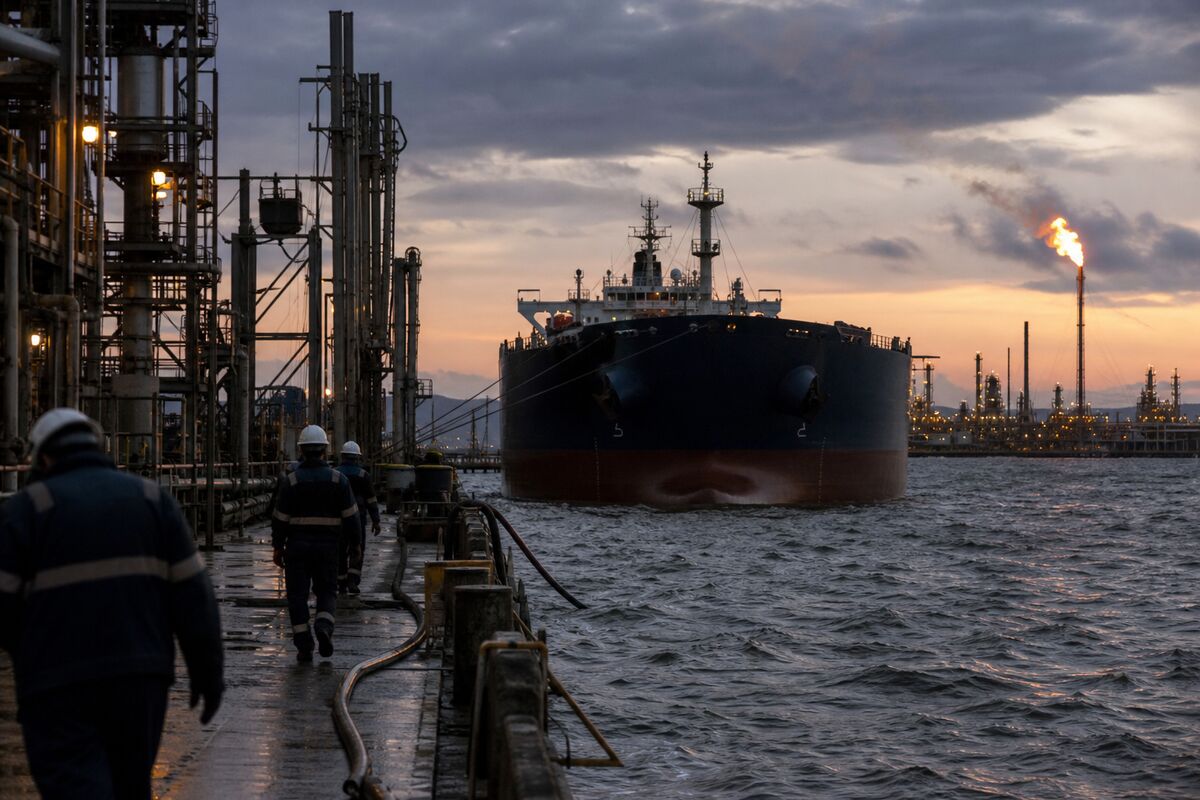
$100 oil changes the market conversation. Brent crude rose above $100 a barrel as conflict between the United States and Iran intensified and attacks on shipping expanded. That move places a fresh burden on US and Canadian equities, even as energy producers such as $XOM and $CVX may receive support from higher crude prices.
The immediate question for traders is whether energy strength can offset the broader economic pressure created by more expensive fuel. The S&P 500 stood at approximately 7,681 on September 9, up 0.10% from the prior session, but the modest gain does little to erase the market's vulnerability to an oil shock. As CNBC's report on Jim Cramer's market view makes clear, stocks face an uphill climb against $100 oil.
The supply concern is geopolitical, not merely technical
Brent's move followed US-Iran military attacks on shipping in the Middle East, including a reported tanker attack in Iraqi waters. The significance extends beyond one vessel or one trading session. Expanding attacks raise concerns about whether the global oil market still has a dependable safety net if shipping disruptions continue.
That distinction matters. Markets can absorb a high commodity price more comfortably when supply routes appear secure and the shock looks temporary. A growing threat to shipping introduces a different variable: uncertainty over transportation, availability and the ability of producers and consumers to adjust. It is not yet clear how long the disruption will last, so traders should resist turning a geopolitical premium into a fixed forecast for crude.
Why the broad market may struggle
Higher oil prices can act like a tax on the economy. Energy-intensive businesses face increased operating costs, while households may have less room for other spending. Those pressures can weigh on the earnings outlook across sectors, even if the market's headline index remains stable in the short term.
Charles Schwab's market-update framing captured that early tension: stocks were down early on oil. Its cited S&P 500 levels provide a practical map for the session and the days ahead. Approximately 7,600 is identified as support, while 7,800 is the relevant resistance level. With the index near 7,681, it sits between those markers rather than decisively clearing either one.
That is not a forecast. It is a framework. A move toward 7,600 would put the cited support level under pressure, while a move toward 7,800 would test the market's ability to absorb the oil shock without losing momentum. The key point is that the index's 0.10% gain does not settle the debate; it shows only where the market stood on September 9.
Energy shares have a different equation
For producers, higher crude prices may offer a more favorable revenue backdrop than the one facing fuel-sensitive industries. That is the potential benefit for energy names such as $XOM and $CVX. But the benefit should be distinguished from a blanket bullish call on the sector or on individual stocks.
The split is straightforward: the broader market is exposed to higher energy costs, while producers may be positioned to benefit from stronger commodity pricing. Whether that relative advantage persists depends on the duration and scope of the shipping disruption, factors that remain unresolved.
The trader's bottom line
The market is balancing a modestly positive S&P 500 session against a materially more serious commodity headline. Brent above $100, the tanker attack in Iraqi waters and the concern over a dwindling supply safety net all raise the stakes. For now, 7,600 and 7,800 define the cited technical boundaries, while $XOM and $CVX represent the clearest examples of how energy exposure can diverge from the broader equity story.
Bull/Bear Verdict
Bull Case: Brent above $100 could support energy producers such as $XOM and $CVX, while the S&P 500's approximately 7,681 level and 0.10% gain indicate that equities have not yet broken below the cited 7,600 support.
Bear Case: Continued US-Iran shipping attacks and the reported tanker attack in Iraqi waters could extend supply uncertainty, pressure the S&P 500 toward 7,600 and make 7,800 resistance harder to overcome.