
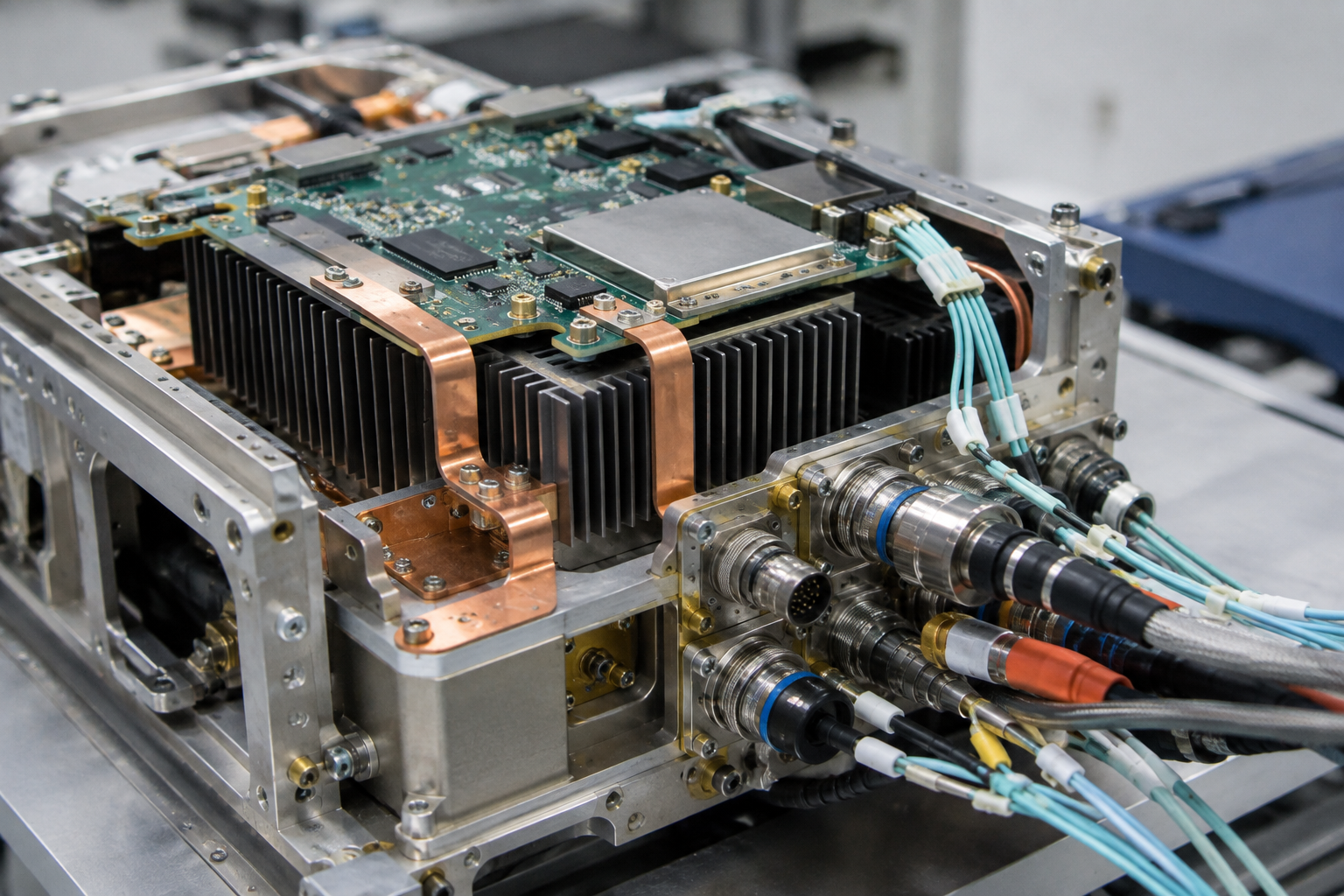
A planned deployment of Google tensor processing units, or TPUs, in orbit is putting a sharper edge on the debate over where artificial-intelligence computing should happen. SpaceX is expected to provide the launch service, while the chips will be carried aboard Planet Labs satellites—a combination that links AI infrastructure, satellite operations and the emerging concept of space-based data centers.
For investors, the important distinction is between technological direction and demonstrated business performance. The report describes a planned launch and technology-development effort, not a completed deployment, operating system or proven commercial outcome. That makes the announcement strategically notable, but it does not yet provide operating metrics, revenue figures or evidence of financial impact for Alphabet Inc. or Planet Labs.
According to the reported plan, SpaceX will launch Google TPUs into orbit, with the chips traveling aboard Planet Labs satellites. SpaceX’s role is centered on launch services. Planet Labs is the publicly traded company identified in the report as PL, or $PL, while Alphabet is relevant through its Google AI hardware and technology development.
Why orbital compute is attracting attention
The concept addresses a straightforward infrastructure problem: terrestrial data centers require substantial land, power and cooling capacity. As AI workloads expand, those constraints may influence how technology companies think about future compute capacity. Moving some processing beyond traditional data-center sites could represent a different infrastructure model, particularly if satellites can combine onboard computing with data collection and transmission.
That is the strategic appeal—not proof that orbital computing is already cheaper, faster or more efficient. The assignment provides no operating results, cost comparisons or performance data for the planned system. Any claim that space-based infrastructure will resolve terrestrial power or cooling bottlenecks remains prospective rather than established.
What the announcement could mean for Alphabet and $PL
For Alphabet, the initiative highlights Google’s role in developing specialized AI chips and exploring new environments for their use. Google TPUs are the central technology named in the plan, but the available information does not establish a new revenue stream, a production milestone or a measurable financial contribution to Alphabet.
For Planet Labs, the connection is more directly tied to its satellite platform. The chips are planned to be carried aboard Planet Labs satellites, placing $PL near an experiment that could connect satellite hardware with onboard AI processing. That may attract investor attention because it extends the conversation around satellites beyond imagery and data collection toward processing capabilities in orbit. Still, the report does not state that the plan has changed Planet Labs’ financial outlook, commercial results or operating performance.
Execution remains the central question
The broader industry push toward space-based data centers is at an early, developmental stage in this report. A planned launch is not the same as a completed deployment. Even after launch, questions would remain around reliability, communications, maintenance, power availability and the practical economics of operating AI hardware in orbit. None of those issues is resolved by the announcement alone.
That is why the data point investors have is directional, not financial: SpaceX plans to launch Google TPUs, Planet Labs satellites are identified as the carrier platform, and the project fits a wider effort to examine computing beyond terrestrial data centers. Until deployment and operating results are reported, the market may treat the initiative as a strategic signal rather than a confirmed business inflection.
Bull/Bear Verdict
Bull Case: The planned launch could give Alphabet’s Google TPU technology and publicly traded $PL exposure to the emerging space-based data-center theme, while testing an approach designed to address land, power and cooling constraints beyond terrestrial facilities.
Bear Case: The report describes a planned launch rather than a completed deployment, and provides no operating performance, cost data, revenue impact or demonstrated commercial outcome for Alphabet or $PL.