
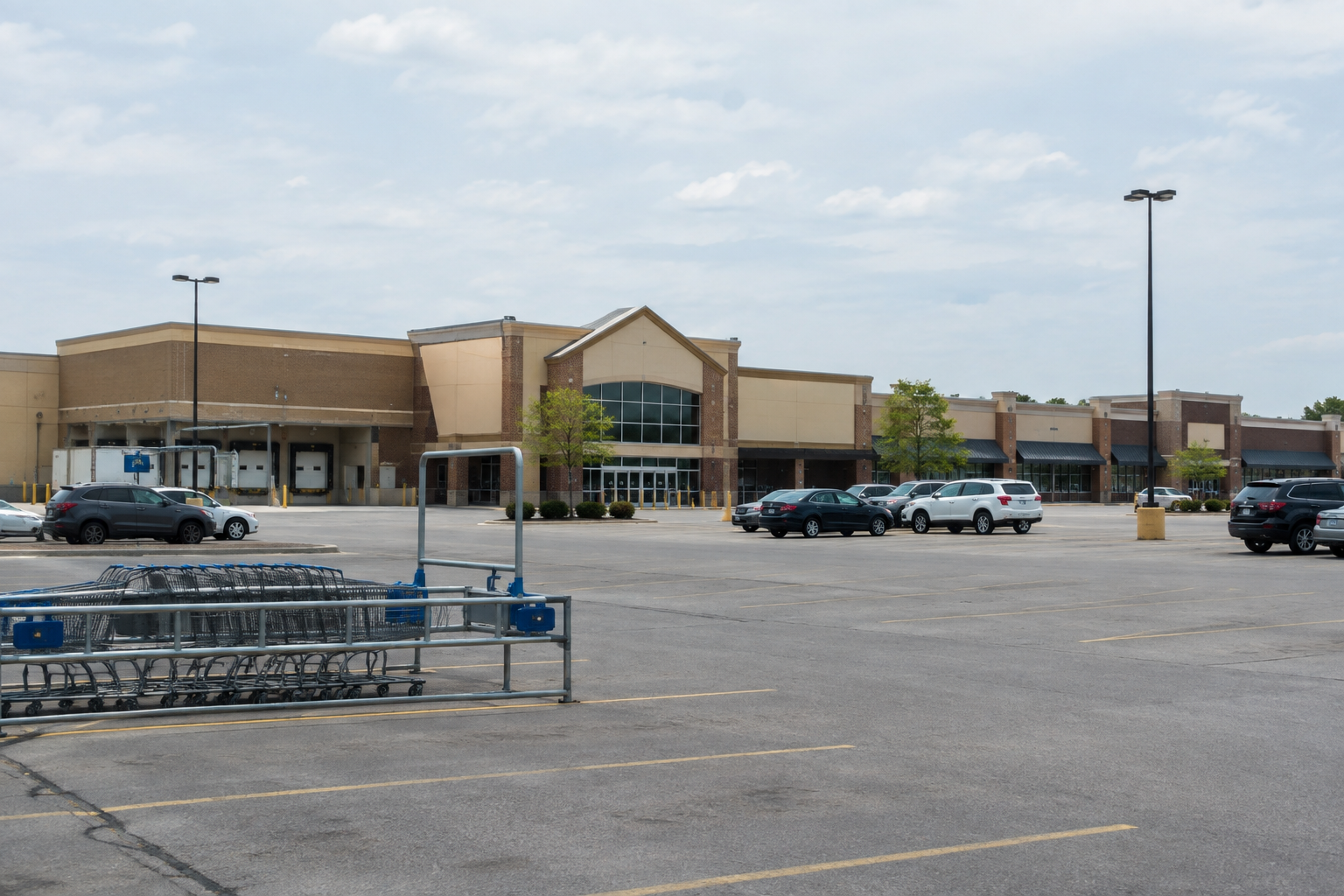
A $2.34 billion acquisition is putting a hard number on investor interest in grocery-anchored retail real estate. Brixmor Property Group and Everview have agreed to acquire Slate Grocery REIT, creating a transaction that could become a useful reference point for buyers, sellers and income-focused investors assessing the sector.
The reported deal is specific: Brixmor Property Group and Everview will acquire Slate Grocery REIT for $2.34 billion. The broader interpretation is less certain. The transaction may suggest that sizable portfolios of grocery-anchored properties remain relevant to real-estate buyers, but it does not, on its own, establish a valuation benchmark for every retail REIT or predict future deal activity.
According to Seeking Alpha’s September 28 report, the acquisition has been agreed at $2.34 billion. The supplied report does not provide a share-price premium, capitalization-rate assumptions, financing details or closing conditions. Those missing terms matter because they determine how investors should interpret the headline value and compare it with other transactions.
Why grocery-anchored properties attract attention
Grocery-anchored retail centers can appeal to income-focused investors and real-estate buyers because they are tied to an everyday consumer need. That positioning may help make the properties relevant when investors are seeking retail assets with an operating profile linked to recurring shopping activity rather than purely discretionary purchases.
That is a sector-level rationale, not a guarantee of property performance. Grocery-anchored assets remain exposed to tenant health, leasing conditions, operating costs and consumer-spending trends. The acquisition also does not disclose the income profile of Slate Grocery REIT, so the $2.34 billion figure should not be treated as evidence of a particular yield or distribution outlook.
A consolidation signal—with limits
The deal is relevant because it brings together Brixmor Property Group, Everview and Slate Grocery REIT in a $2.34 billion transaction. For the grocery-anchored retail sector, that may reinforce the idea that scale and portfolio ownership can be strategic considerations for real-estate buyers.
Still, one agreed acquisition is not proof that consolidation is accelerating across the entire market. Investors may examine whether the transaction reflects an acquisition premium, how implied capitalization rates compare with other property deals and whether REIT valuations support additional combinations. No figures for those measures were supplied in the reported announcement, so the correct conclusion is that the deal creates a reference point for analysis—not a complete sector valuation framework.
Interest rates and consumer spending remain key variables
Retail real estate is sensitive to interest-rate movements because financing costs and property valuations can influence acquisition economics. Higher or lower rates may affect the price buyers can justify, the appeal of real-estate income and the gap between public-market REIT valuations and private-market transaction values.
Consumer spending is another variable. Grocery demand may provide a different exposure from more discretionary retail categories, but grocery-anchored centers are still commercial properties dependent on tenants and shoppers. The supplied information does not support a forecast for rates, spending, rents or property values.
For now, the clearest data point is the agreed $2.34 billion price. The transaction may attract attention from investors tracking defensive retail assets, but its ultimate significance will depend on the detailed terms and how the market compares them with capitalization rates, premiums and REIT valuations elsewhere.
Bull/Bear Verdict
Bull Case: The agreed $2.34 billion acquisition may indicate that grocery-anchored retail portfolios remain attractive to buyers seeking scale and exposure to everyday consumer activity.
Bear Case: The $2.34 billion headline does not include a reported premium, capitalization rate, financing structure or closing conditions, while interest-rate and consumer-spending sensitivity could complicate the sector outlook.