
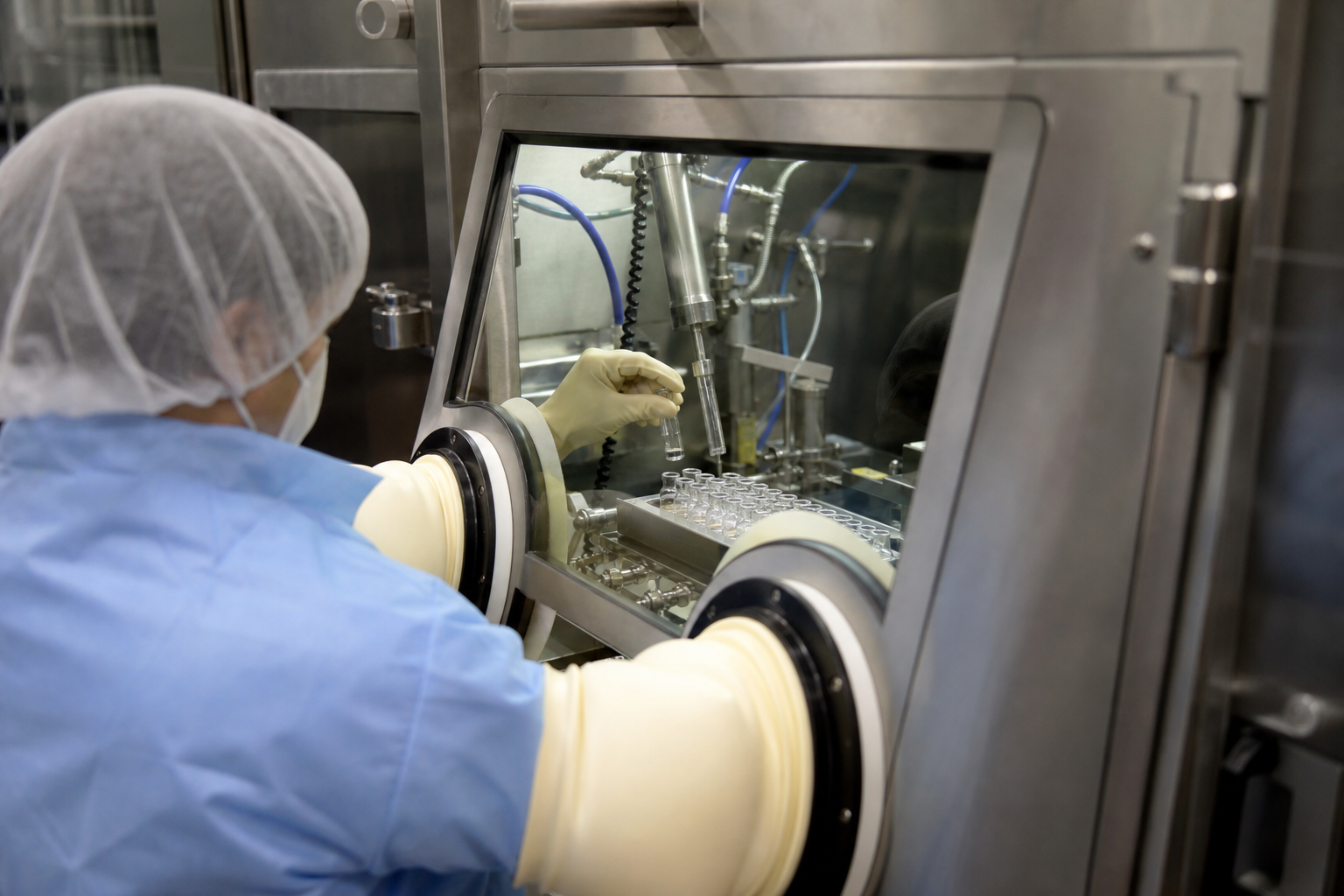
Radiopharmaceuticals are turning medicine into a map of the body—and Nasdaq-listed Lantheus is proposing to redraw that map on a global scale. The company’s definitive agreement to merge with private radiopharmaceutical business Curium would value the combined entity at $8 billion and extend its planned reach across more than 70 countries.
For investors watching the US-listed radiopharmaceutical sector, this is more than a corporate handshake. It is a proposed combination of Curium’s private-company platform and Lantheus’ public-market profile, creating a company positioned across oncology, neurology and cardiology. The deal puts $LNTH at the center of a strategic effort to build a global radiopharmaceutical leader.
Curium announced the agreement on August 3, 2026, according to the company’s announcement. The headline figure is clear: the transaction values the combined entity at $8 billion. That valuation gives the market a concrete marker for the scale both companies are seeking to assemble, even as the proposed merger remains a transaction to be completed rather than an operating result already delivered.
A bigger platform for a specialized sector
Radiopharmaceuticals occupy a distinctive place in healthcare. These products combine radioactive components with pharmaceutical agents, supporting applications that can help identify or target disease. The assignment does not provide specific clinical outcomes or financial forecasts for the merger, but it does identify the strategic importance of radiopharmaceuticals and targeted cancer therapies.
That importance is visible in the combination’s planned scope. The merged company would operate across oncology, neurology and cardiology in more than 70 countries. Those three areas give the proposed enterprise a broad medical footprint, rather than a narrow identity tied to a single condition or specialty.
Oncology is central to the radiopharmaceutical story because targeted therapies are designed around the relationship between a treatment and a particular biological target. Neurology and cardiology widen the platform’s potential applications beyond cancer. The result, if completed as described, would be a business built to serve multiple areas of medicine while maintaining a common radiopharmaceutical foundation.
What the deal means for $LNTH investors
For Lantheus shareholders, the proposed merger changes the lens through which the company may be evaluated. Lantheus would no longer be viewed only through its existing public-company profile; investors would also be assessing how Curium’s private-company platform fits into the combined organization and how the expanded international reach could shape the company’s strategic position.
The $8 billion combined-entity valuation supplies a prominent reference point, but it does not answer every question facing the market. Investors may monitor the proposed transaction’s progress, the eventual structure of the combination and the way management describes operations across the three medical areas. They may also watch $LNTH’s market reaction and broader sentiment toward US-listed radiopharmaceutical companies.
That market reaction could become part of the story, but no specific price move is assigned here. The more grounded takeaway is that Lantheus is seeking a larger global platform, while Curium would gain a connection to a public-market company through the proposed merger.
A global ambition with a clear test ahead
The merger’s ambition is easy to state: unite two radiopharmaceutical businesses into a global leader serving more than 70 countries. Its significance lies in the combination of reach, therapeutic focus and corporate structure. Curium brings a private-company platform; Lantheus brings a Nasdaq listing and public-market profile; together, the companies are proposing an $8 billion enterprise spanning oncology, neurology and cardiology.
For the sector, the transaction may signal how specialized healthcare companies can pursue scale without abandoning a focused technology base. For investors, it creates a new benchmark to follow—but also a reminder that the announced valuation and planned reach describe the proposed combination, not guaranteed outcomes.
Bull/Bear Verdict
Bull Case: The proposed $8 billion combination could give $LNTH a broader global platform across oncology, neurology and cardiology, with planned operations in more than 70 countries.
Bear Case: The $8 billion valuation and international footprint describe a proposed transaction, so investors may remain focused on completion and how effectively the Curium and Lantheus platforms are combined.