
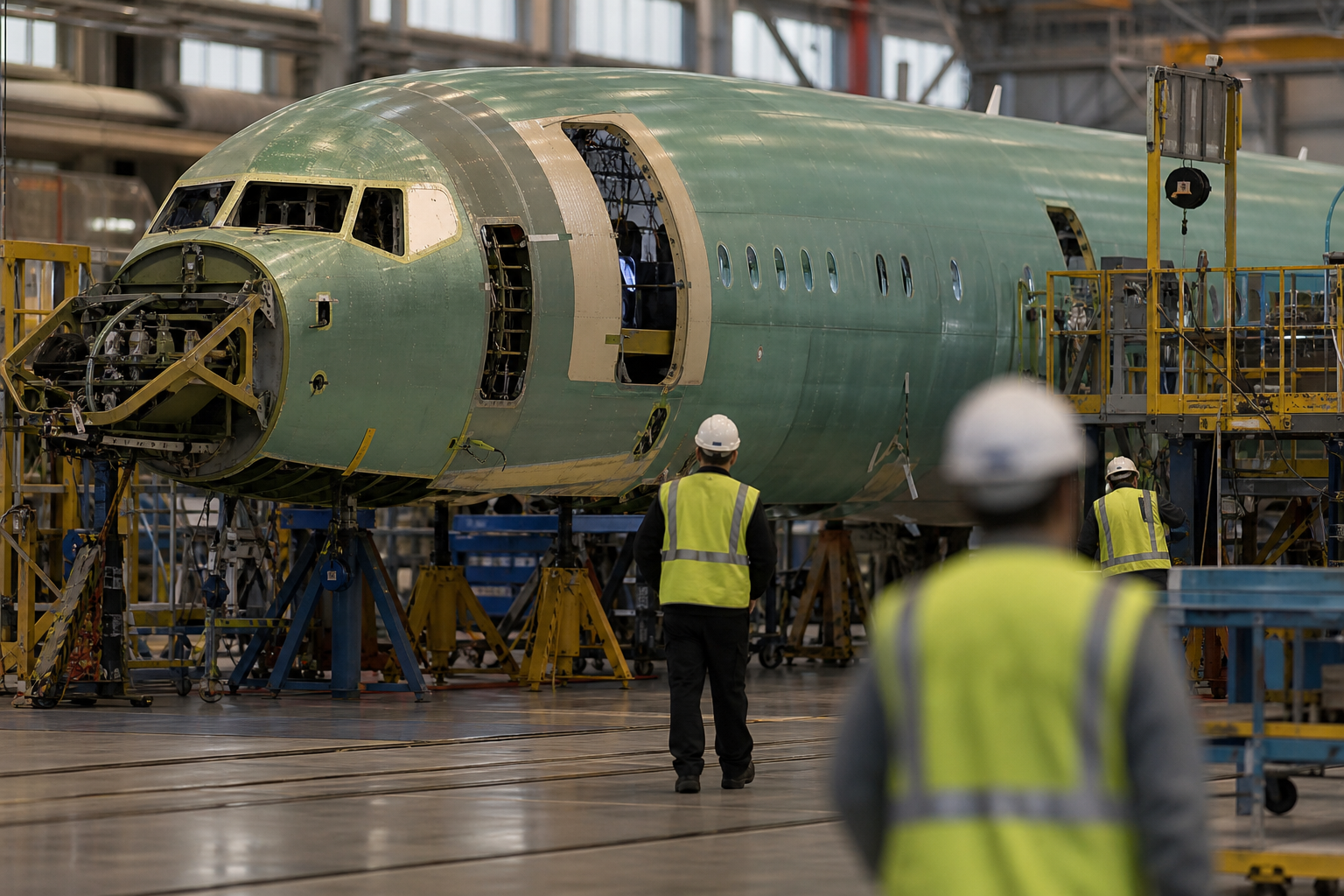
Boeing’s 737 Max recovery is not moving on the timetable investors wanted. The company’s CEO said stabilizing production is taking “a little bit longer” than expected, a blunt acknowledgment that operational headwinds remain at the center of the Boeing investment story.
For holders and watchers of NYSE-listed $BA, the comment matters because production stability is closely tied to aircraft deliveries, revenue timing and cash-flow generation. The statement does not establish a new production target or timetable, but it reinforces that Boeing’s core commercial aircraft program has not yet reached the level of normalization the market has been waiting for.
In a report published September 16, 2026, CNBC cited Boeing’s CEO saying that stabilizing 737 Max production is taking longer than expected. The company did not provide revised production-rate targets or a new stabilization timeline in the source material.
Why the comment matters for Boeing
The 737 Max has remained a source of production, regulatory and reputational challenges for Boeing. That history gives even a carefully worded operational update added market significance. Investors are not simply evaluating one manufacturing issue; they are assessing whether Boeing can create a more predictable path from production to delivery and, ultimately, cash generation.
A delay in stabilization may complicate expectations around when aircraft deliveries can normalize. It may also keep questions around revenue timing and cash flow in focus. The available information does not quantify the financial effect, and it does not support an estimate for a stock-price reaction. Still, the CEO’s comment indicates that the operational timeline remains less certain than investors had hoped.
Market relevance for $BA
Boeing is a Dow Jones Industrial Average component and a widely held NYSE industrial stock. That makes its execution record relevant beyond the company’s own shareholder base. The 737 Max is a central commercial aircraft program, so continued uncertainty can influence how investors view Boeing’s broader operational progress.
Airline customers may monitor production normalization because aircraft delivery schedules matter to fleet planning. Companies in Boeing’s aircraft supply chain may also watch for signs that production is becoming more consistent. However, the source does not report specific effects on airlines, suppliers or individual delivery schedules. Those potential connections should therefore be treated as areas of market attention, not established outcomes.
The bottom line
This is not a new forecast, a revised production plan or a quantified financial warning. It is a company-level acknowledgment that stabilization is taking longer than expected. That distinction matters. Boeing’s CEO has provided investors with a signal about execution, but not enough operational detail to determine the precise financial consequences.
For $BA, the next meaningful evidence would be clearer information on production rates, delivery timing and cash-flow generation. Until that information arrives, investor sentiment may remain sensitive to every update on the 737 Max’s path toward stable production.
Bull/Bear Verdict
Bull Case: If Boeing can stabilize 737 Max production, clearer delivery timing and more predictable cash-flow generation may improve sentiment toward $BA, although no new timeline was provided.
Bear Case: The CEO’s statement that stabilization is taking “a little bit longer” than expected may keep concerns about production execution, revenue timing and cash flow elevated.