
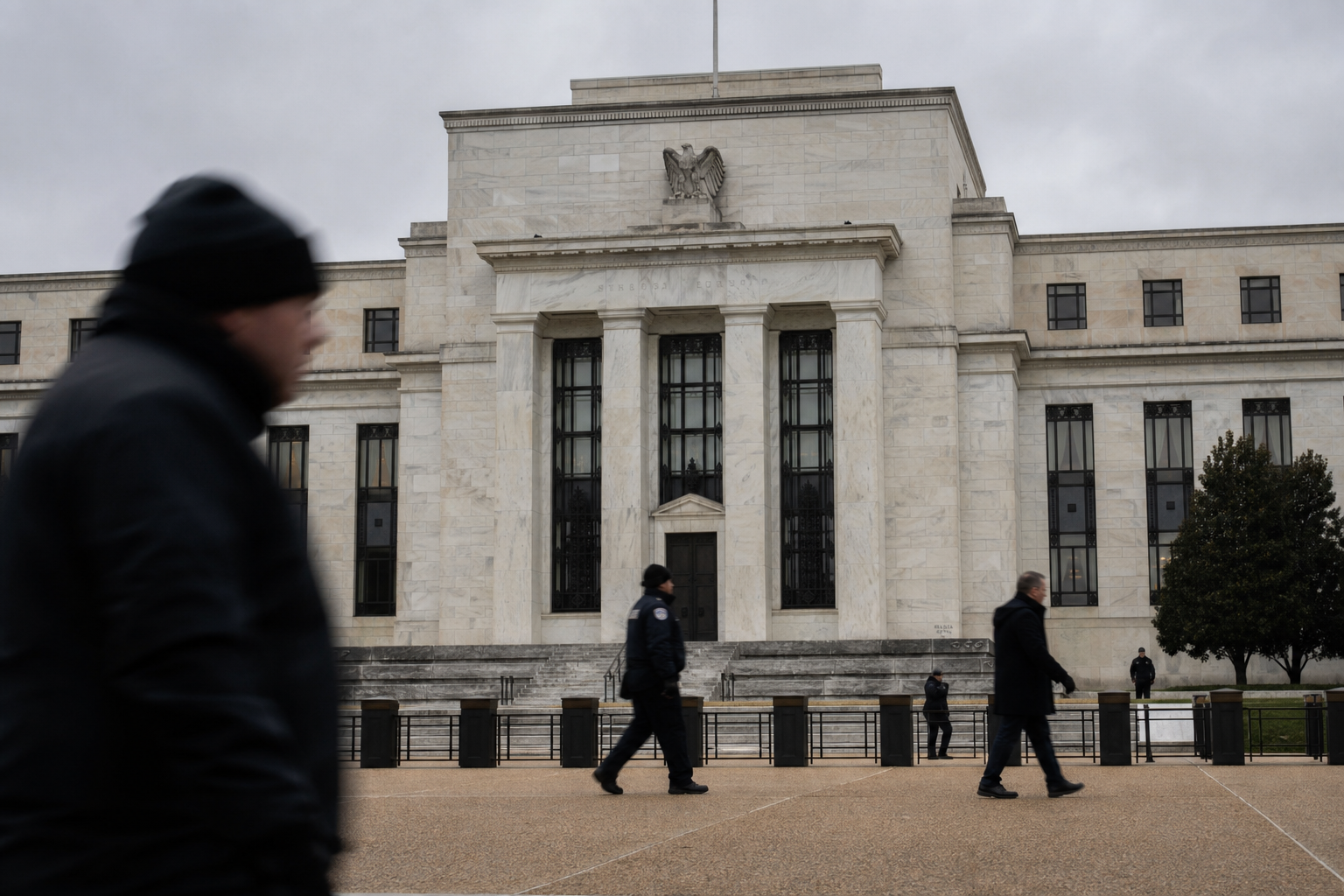
US markets are approaching a Federal Reserve decision with the 10-year Treasury yield hovering above 5%—a level that keeps valuation pressure front and center for equity traders. The central question is no longer only whether the widely expected interest-rate hike arrives, but what the Fed’s forward guidance signals about the path beyond this meeting.
The setup is unusually sensitive to both bond-market pricing and policy language. The S&P 500, tracked here as $US500, stood at 7,601 points on September 16, 2026, up 0.20% on the session but down 1.86% over the past month. Meanwhile, futures were trending higher before the decision as investors weighed reduced fears of an AI slowdown, creating a market that could react sharply if the Fed’s message clashes with current positioning.
CNBC’s Treasury-market coverage highlights the central pressure point: a 10-year yield above 5% raises the discount rate applied to future corporate cash flows. That can weigh particularly heavily on growth-stock valuations, where a larger share of expected value rests further in the future. The same yield backdrop may also pressure real estate and utilities, sectors often watched for their sensitivity to financing costs and relative appeal versus government bonds.
Why the 5% yield matters for equities
Higher Treasury yields can affect stocks through several channels. First, they may compress valuation multiples as investors demand a greater return to compensate for the availability of higher-yielding government debt. Second, companies with refinancing needs or heavy borrowing costs may face more pressure on earnings and cash flow. Third, elevated yields can shift leadership away from rate-sensitive groups even if the broader index remains comparatively stable.
- Growth stocks: Higher discount rates may make long-duration earnings less valuable in present terms.
- Real estate: Financing costs and competition from Treasury yields remain key variables.
- Utilities: The sector may face pressure as bond yields alter income-oriented positioning.
- Highly leveraged companies: Debt-servicing costs could become a more important earnings consideration.
That does not establish a certain direction for $US500 after the announcement. It does, however, identify the transmission mechanism traders are likely to monitor: whether Treasury yields extend their move and whether rate-sensitive sectors underperform the index.
Volatility is already sending a signal
Risk hedging has become more visible. The Cboe Volatility Index, or $VIX, rose nearly 8% to 17.10 on Monday as investors hedged equity-market risk. That reading is not a forecast of the Fed reaction, but it indicates that options-market demand for protection increased ahead of a known policy catalyst.
A hawkish message—such as guidance that keeps rates higher for longer—could place renewed upward pressure on Treasury yields and create a tougher valuation backdrop for growth stocks, real estate and utilities. It could also lift volatility if traders reduce equity exposure or reprice the expected path of rates.
A dovish message could produce the opposite reaction: Treasury yields may ease, rate-sensitive sectors could find support, and equity valuations may receive relief. But the market response would depend on the gap between the actual communication and what investors have already priced in. Even an unchanged policy decision can generate a significant move if the guidance changes the perceived trajectory.
Soft data complicates the policy picture
The September Empire State Manufacturing index came in at 7.6, below expectations. That provides a softer economic signal for traders to weigh alongside the elevated 10-year yield and the Fed’s expected hike. The data point does not determine the policy outcome, but it adds a counterweight to the argument for an unambiguously restrictive interpretation of the meeting.
This tension—firm bond yields against weaker-than-expected manufacturing data—may keep the initial reaction unstable. Futures trending higher before the decision show that investors were also considering reduced fears of an AI slowdown. If that optimism survives the policy language, $US500 may hold up even with yields above 5%. If the Fed emphasizes persistent inflation or additional restraint, the index’s 1.86% monthly decline becomes a relevant backdrop for measuring follow-through.
Levels and sectors to monitor
After the announcement, traders may focus on four indicators: the 10-year Treasury yield, $US500 at 7,601, $VIX at 17.10, and relative performance across growth, real estate, utilities and highly leveraged businesses. The key question is whether yields rise alongside volatility, or whether a softer policy interpretation allows both pressures to ease.
The market is therefore entering the decision with competing signals: a 5%-plus 10-year yield, a monthly decline in the S&P 500, higher hedging activity, stronger pre-decision futures and a below-expectations manufacturing reading. The Fed’s words could determine which of those signals dominates the next trading phase.
Bull/Bear Verdict
Bull Case: Futures trending higher, reduced fears of an AI slowdown and a possible dovish interpretation could support $US500 above its 7,601-point level while helping contain the $VIX at 17.10.
Bear Case: A hawkish Fed message could push the 10-year yield further above 5%, intensify pressure on growth, real estate and utilities, and extend the S&P 500’s 1.86% monthly decline alongside higher volatility.