
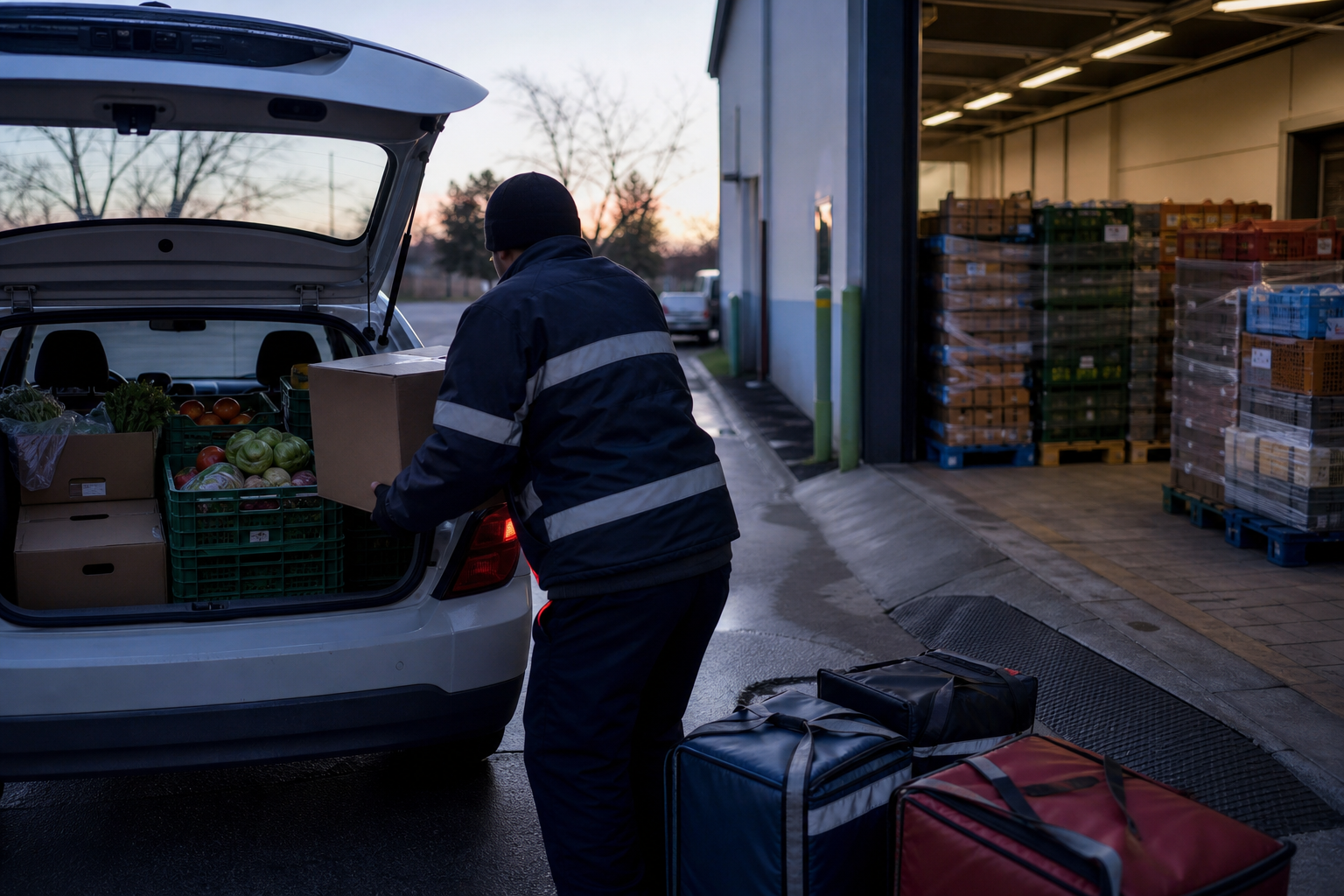
Costco and Uber are turning geographic reach into the next battleground in grocery delivery. Their expansion to 47 U.S. states, up from 17 previously, nearly triples the footprint of Costco delivery through Uber Eats and puts a marquee warehouse-club relationship under a much larger investor microscope.
The announcement is strategically important for both companies. Costco may gain additional purchasing convenience and customer reach without requiring a comparable expansion of its physical warehouse footprint, while Uber Eats gains a high-profile retail partner in an intensely competitive delivery market. The question now is whether broader availability translates into durable usage—or simply creates a larger test of delivery economics.
Costco members can order delivery from the warehouse club through Uber Eats, but membership remains required. That condition preserves the central role of Costco’s membership model while adding another access point for shoppers who may value convenience, speed or the ability to avoid a warehouse visit.
For $COST, the expansion could extend the practical reach of its existing warehouse network. The company does not need to open a new physical location in every market to make its products more accessible through the service. That does not automatically mean the partnership will materially change Costco’s business, but it gives investors a clear operating question: can delivery availability drive incremental order volume and strengthen member retention?
The implications for $UBER are different. Costco is more than another merchant on the platform; it is a marquee retail and warehouse-club partner. A broader Costco relationship may help Uber Eats compete for grocery and bulk-shopping occasions against DoorDash and Instacart. It also gives Uber a high-visibility example of how its delivery network can connect established retailers with a wider customer base.
Still, scale alone is not the finish line. Investors will need to watch how order frequency develops across the newly covered states, how delivery economics evolve and whether the arrangement improves customer retention for either company. Expanding from 17 states to 47 increases the opportunity, but it also increases the range of markets in which costs, demand and fulfillment performance will be tested.
That is where the market reaction may become more informative than the headline. Traders may monitor trading volume and price action in $COST and $UBER following the announcement, while resisting the temptation to treat expanded coverage as proof of financial success. The details that matter most—incremental orders, delivery economics and retention—will develop over time.
As CNBC reported, the partnership now reaches 47 states, compared with 17 previously. That is a meaningful increase in availability, but the investment case remains a measurement exercise: reach is the opening move, not the result.
Bull/Bear Verdict
Bull Case: Expanding Costco-Uber Eats coverage from 17 to 47 states could broaden member purchasing convenience, support incremental order volume and strengthen Uber Eats’ position against DoorDash and Instacart.
Bear Case: The wider footprint may not translate into durable gains if order volume, delivery economics or customer retention fail to improve despite the service’s expansion to 47 states.