
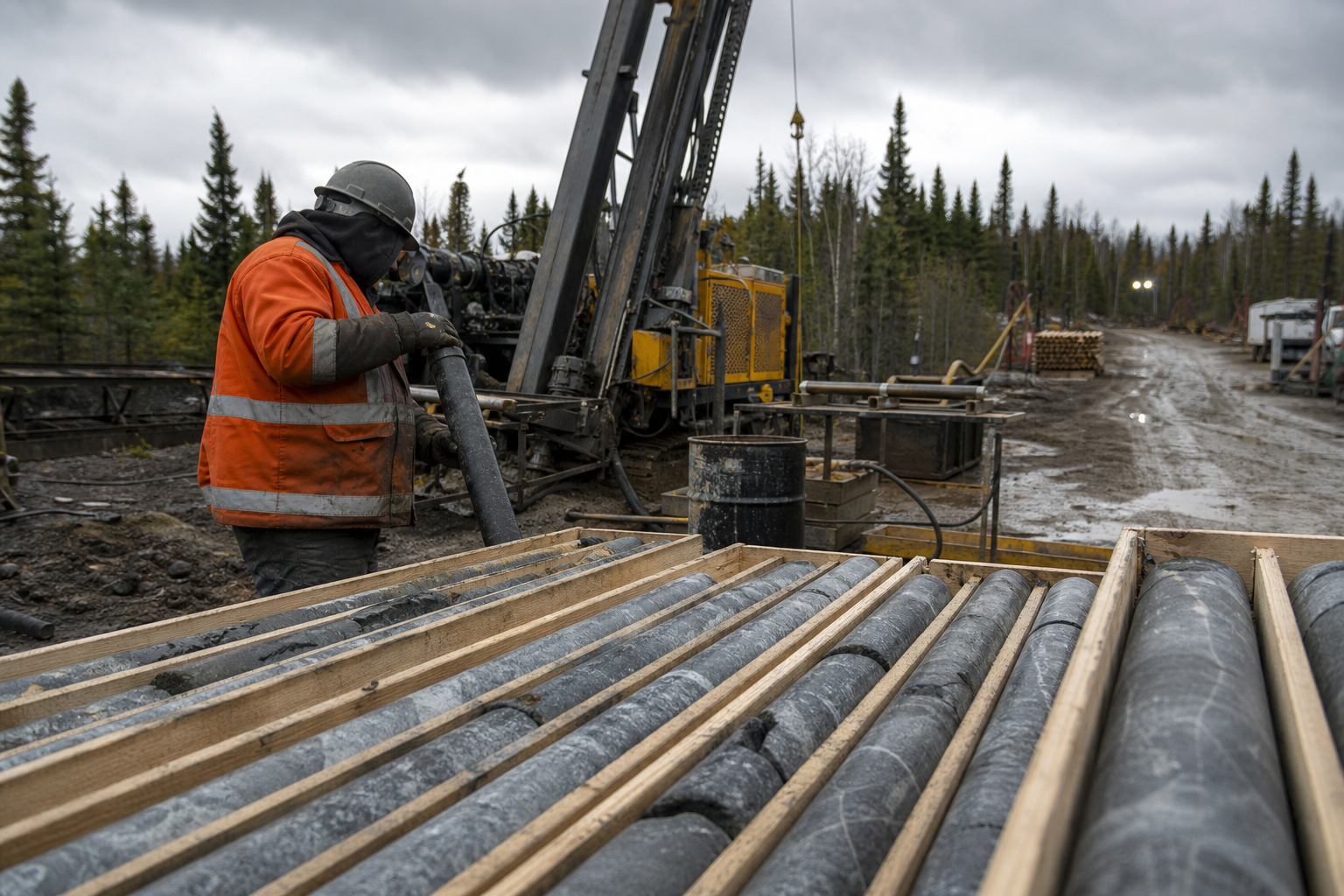
Cadillac Mines has added another piece to its Abitibi puzzle. With the completed acquisition of the Larder Property from Pan American Silver, the Canadian junior now controls a larger land position in one of Ontario’s best-known gold districts—more than 27,000 hectares in total.
For traders and junior-mining investors, the significance is less about an overnight change in project economics than about corporate shape. The transaction gives $CADY a broader gold resource base and a more consolidated Abitibi footprint, while $PAAS has completed what the source describes as a non-core asset divestiture.
Cadillac Mines Corporation, listed on the TSX as $CADY, finalized the previously announced transaction on September 15, 2026, according to the official GlobalNewswire release. The Larder Property acquisition grows Cadillac Mines’ gold resource base and expands its Abitibi land position to more than 27,000 hectares.
A bigger map, not a promised mine
The cleanest way to read this announcement is as a land-consolidation story. Cadillac Mines has increased the scale of its Canadian exploration platform, but the supplied announcement does not provide a purchase price, updated resource estimate, drilling results, production guidance or project economics.
That distinction matters. A larger land package can give a junior miner more room to organize its exploration strategy, but acreage alone does not establish a development timeline or demonstrate future production. In this case, the hard data point is the expanded footprint: more than 27,000 hectares across the Abitibi position after the Larder Property transaction.
For market participants, that creates a corporate-development marker rather than a definitive operating milestone. The acquisition indicates that Cadillac Mines is building scale in a recognized Canadian gold belt. What comes next, however, would require separate confirmation through technical disclosures, exploration results or resource updates—none of which are included in this announcement.
Why Abitibi consolidation matters
Ontario’s Abitibi gold belt has long been a landscape where property boundaries can matter almost as much as the rocks beneath them. Consolidating land may help a junior present a more coherent district-scale story, rather than a collection of isolated claims. That can make the company’s narrative easier for traders and investors to follow, although it does not remove the technical and financial uncertainties that accompany mineral exploration.
The transaction may also sharpen the market’s view of Cadillac Mines as a land-position and resource-growth vehicle. The company now has a larger platform from which to frame its Abitibi ambitions. Still, the available information supports only that description: resource-base expansion and land consolidation. It does not support claims about a new mine, near-term output or improved project economics.
Pan American’s portfolio-rationalization angle
For Pan American Silver, listed on both the TSX and Nasdaq as $PAAS, the sale is presented as a non-core asset divestiture. That framing places the transaction within a portfolio-rationalization context without requiring additional assumptions about the company’s motives.
In practical terms, one company’s non-core property can become another company’s central growth platform. Cadillac Mines is gaining land and resource exposure; Pan American Silver is transferring an asset it no longer considers core to its portfolio. The release supplies no purchase price or further strategic rationale, so investors are left with the transaction’s structural facts rather than a detailed valuation debate.
The investor takeaway
The completed Larder Property acquisition gives $CADY a clearer scale story: a larger gold resource base and an Abitibi land position exceeding 27,000 hectares. That may be relevant to Canadian junior-mining investors tracking consolidation and district-scale ownership.
But the announcement is also a reminder to separate corporate progress from technical proof. The deal establishes ownership and land-position expansion. It does not, by itself, establish production, project economics or a timetable for development. Those questions remain outside the information supplied here.
Bull/Bear Verdict
Bull Case: The completed acquisition may strengthen Cadillac Mines’ corporate story by expanding its gold resource base and taking its Abitibi land position beyond 27,000 hectares.
Bear Case: The announcement provides no purchase price, resource estimate, drilling results, production guidance or project economics, so the transaction’s operating significance remains unconfirmed.